Recently, Trump signed yet another EO establishing the White House Faith Office, and deemed Paula White-Cain as the head. Faith based offices in the White House are nothing new (at least in recent American History), but this one is different, especially due to who is in charge, and due to the wording of its purpose and agenda.
If you read my blog entry before this one, you might recall that I wrote a comment about what bothers me when someone describes something using the word “faith” in a general sense, when behind it is meant a more specific kind of faith- usually the faith of evangelical Christians. We see it used in adverts like, “faith night” or in a recent (false) comment, “the faith of the larger community” of the United States implying a specific religion, or in most recent news, “The Establishment of the White House Faith Office”. In my last blog, I had mentioned Rep. Collins’ absurd response to Bishop Budde’s message on January 21, 2025 at the Washington National Cathedral when he responded that it is “not representative of the ‘faith’ community at large”. My initial response to that was, “Whose faith?” What “faith community”? Because a blanket title of “faith” in such an assumption is exclusive in and of itself, and is why I get annoyed every time something like sports teams host a “faith night” at their venue. Whose faith? What kind of faith? Just be transparent and say what it actually is, please. (And btw- it’s always a Christian Evangelical faith night.)
As far as the newly established version of the White House Faith Office, while also similarly implying a particular kind of Christianity, I would also say that “faith” as referenced by this WHFO is not even a broad brush of Christian evangelicals. For there has been backlash from conservative evangelical leaders as well about re-appointing Paula White-Cain to this office. She is not widely supported even by Christian Evangelicals who see her heresy. It would be more accurate to say that the “faith” and “religion” this administration wants to see “bigger and better”, and that it wrongly feels is suffering from “anti-religious bias”, is the MAGA religion, and the sacrilegious movement of Christian Nationalism. Americans United described Paula White-Cain as a “‘Christian Nationalist powerbroker’ who’s spent much of her career operating in the shadows to influence public policies that discriminate against women, LGBTQ+ people and religious minorities, and the nomination of partisan judges who will support those harmful policies.” Paula White-Cain is a Prosperity Gospel proponent, but not the kind that is seeking reassurance from God, but rather the kind that pretends a business contract has been signed by God in a promise and “blessing” of grotesque material wealth.
About “The Establishment of the White House Faith Office” Trump remarked, “We want to bring religion back- stronger, bigger, better than ever before.” Whose religion? Islam? Buddhism? Sikh? Judaism? And if Christian, do they mean a particular kind of Christianity? How about Jesus following, intent on gospel living, progressive Christians? Are those Christians included in the “bring back stronger, bigger, and better”? Well, given the Trump/MAGA response to Bishop Budde’s Gospel message for mercy and compassion, which Trump vehemently rejected, obviously not. I’m quite confident a woke (like Jesus himself), religious, but skeptic, faithful, Jesus following, inclusive to all, justice seeking, but interrogating-the-powers-that-be kind of person of faith is the “anti-religious biased” kind of enemy, against-their-brand-of-religion, in which they seek to silence.
Truthfully, the rise of Christian Nationalism has been a long time in the making, and we’ve seen all the warning signs. Trump’s agenda is to usher it in, and give power to those who will help to do so. But Christian Nationalism is everything antithetical to the gospel, and to Jesus’ way. “Christian Nationalist” is actually an oxymoron. One cannot follow a God of liberation and embrace something called “Christian Nationalism”. That is an identity lodged with power and oppression, not Love of Thy Neighbor. (I would refer you to 2nd Corinthians, chapter 11.) It is idolatrous to state Christianity needs government protection. It is a sign of a weak faith to do so. Deep faith in Jesus’ way trusts in a merciful authority, eternally and perpetually present as empires rise and fall. (See Proverbs 27:24.) It is blasphemous to purport a prosperity gospel religion of which Paula White-Cain espouses, and makes Jesus into a warped image, wrapped in an American flag, and used to pretend a divine power intervenes in the world to bring about the tyranny we currently face. “God saved my life so I could save America.” -Trump. “To oppose Trump is to oppose God.” -Paula White-Cain. That’s quite an equivalence of the two! Such rhetoric equates God with Trump in an idol worship, and makes a bold, arrogant claim about God’s providence. Trump reiterated his own boastful arrogance at the National Prayer Breakfast by reminding us that he has “heard it from other leaders” that “a light shines over the world” now that he is POTUS. Many of his remarks like these are blasphemous when meshed with Christianity, including that he “likes people who make money”. Too bad Jesus doesn’t! (See Luke 12:15. See also Jeremiah 9:23, Philippians 2:3, James 4:6, 2 Peter 2:14-16, Jude 11, 1 Timothy 6:9-10 to name a few of so many verses that warn against arrogance and pridefulness.)
You might accuse me of cherry picking Bible verses. You would be accurate. But the Bible is a collection of texts reflecting a diversity of viewpoints, written over hundreds of years, and I hate to burst a myopic, comfortable, homogeneous bubble, but there is no one single worldview represented in it. There are many voices and worldviews in the Bible. Therefor the question is, which biblical worldview does one espouse? Which verses (that we all cherry pick) through our reading, through what baggage we bring to them, through our interpretations of the interpretations, reflect the Gospel and the liberating vision of Jesus? Are we also doing so with humility? This is why one of my favorite verses is Matthew 22:40, with the former two verses in context, it gives us the important directive to use the lens of Jesus’ love in all that we read and hear, including what we read in the Bible, including what we here from those in the pulpit(s) of churches and varied spaces (like the White House). Is this a message of mercy, and of life giving, spiritual abundance, or is this a message of entitlement to wealth and materialism? Is this a message of faith in the midst of uncertainty, or an assured divine intervention for one’s self, or the one on an orange pedestal if you will, while others continue to suffer and die by making the excuse of it all being “god’s (cruel) plan”? There are worldviews in the Bible that promote exclusion and worldviews that promote inclusion. Both worldviews are present within the Bible, and neither represents the biblical worldview. The more we study the Bible, the more we realize this conundrum, and it is why sound biblical study matters greatly.
Christian Nationalism uses Christian language and Bible verses to actually attack religious liberty, not support it. “Faith” as used by this administration is weaponized against religious freedom. Christian Nationalism is not Christianity. Christian Nationalism is a political and ideological stance that distorts what Christianity and religious liberty truly mean. Christian Nationalism is a false idol. Christian Nationalism is evil. Christian Nationalism is a sin. It fuses being an American with being Christian as if it is a requirement by a transactional God. Christian Nationalism and its misusage of “religious liberty” is in fact itself a threat to religious liberty. Jesus himself was crucified for denouncing the religious and political heresy in his lifetime, and Jesus would denounce today’s false claim of Christian Nationalism, too. Jesus’ message was and is to create a kin-dom of God, wherein blindness is restored, the poor receive the Good News, and the oppressed are set free, and this has always transcended government sanctions, for which Jesus never promoted his message to adhere to or be “protected” by.
While there have been other “faith” efforts, causes, and offices within previous presidencies along all political spectrums (The Faith Based and Community Initiatives-Bush, 2001; the White House Office of Faith-Based Initiatives-Obama, 2009, which was revitalized by Biden, etc.), all of which have had questionable constitutionality, and separation of church and state concerns, those mentioned in the previous parenthesis made clear they were establishing partnerships and help regardless of religious or political beliefs. And where warnings of proselytizing are made clear as unacceptable (much like my work as a chaplain). This new one in Trump’s 2025 administration is different, and it is dangerously different. This is evident in what has already occurred in direct violation of religious freedom by attacking and defunding government systems that serve the most vulnerable, and falsely accusing religious groups (Lutherans, Quakers, etc.) of financial misconduct. We have already seen the ways this administration and this brand of MAGA religion abuses “religious liberty” to grasp tightly to privilege and power. And by the way, USAID has been a longstanding, bipartisan (even supported by Trump in his first term) organization where the government in partnership with religious entities of various kinds has been able to do what it does- doing so much good- because of the strength in those partnerships. While every administration comes in and makes changes and adjustments, to try to completely dissolve USAID is cruel, and will have, and is already having, devastating, human harming consequences.
I could be wrong, but this newly established office in the white house looks to be about silencing and going after those who do not believe the unconstitutional idea that the U.S. is a Christian Nation, or at least that it should be, under the guise of “combatting anti-Semitic, anti-Christian, and additional forms of anti-religious bias”. It flies another red flag in warning of an ongoing white supremacist attack on civil rights, and all things Diversity, Equity and Inclusion. By anti-religious bias, they likely mean voices of the woke-type, we progressive types, you know-we, among others, who believe in the mercy of Jesus. They also likely mean the atheists and agnostics (who are sometimes also religious, like me), who are deemed lost and threatening to their narrow definition of being American and “Christian”, when in reality they live lives of deep spiritual awareness, are salt of the earth philanthropists, and act in ways that reflect Jesus more so than many who call themselves Christian. Might those of us who continue to advocate for, who speak up and speak out for such Christlike mercy, and abounding ways of human flourishing, risk being silenced or punished in the near future? Time will tell. If so, I will not stop in the face of such a possibility, even as I will not be deemed the right kind of Christian in Paula White-Cain’s eyes, or like the “so-called Bishop” (Bishop Budde) whom Trump demeans as such, I would also then be a “so-called Reverend” to him.
Trump gave only one example of his version of “anti-religious” bias, when he announced the new office, by giving a revisionist historical account of those he pardoned who were illegally blocking an entrance to an abortion clinic and stealing fetal tissue, by saying they were simply “praying”… We have been warned about the Paula White-Cain, JD Vance (who is Catholic; a specific kind of Catholic), and Trump types who misuse the Bible (and/or likely haven’t read it much, if at all); the kind of leadership that might sound like something Christlike, but truly fails to act as such. (See Matthew 7:15.) Its endeavor to endorse religious liberty only intends to do so for a particular brand of religious-types. That is not what religious liberty means. It is the “freedom to believe and exercise upon religious conscience without unnecessary interference by the government. Just as religious liberty involves the freedom to practice religion, it also means freedom not to practice religion.” And as a Baptist myself, religious freedom is an affirmation of freedom of, for, and from religion, and as we Baptists believe strongly in the separation of church and state. It is the freedom to practice any religion, and the freedom to not practice any religion, and our responsibility to protect either one for ourselves and our fellow country-persons. It is to acknowledge the vastly different religions and beliefs in our nation and world, and to strive to live peaceably together. In the same way Paula White-Cain will exploit Christianity for power and money, in the same way that January 6 insurrectionists carried crosses and signs that said, “Jesus Saves” while being violent, and in the same way this party in power seeks to establish their religion as the persecuted one, and the right one, their god is a god of pettiness and power, not a God of love and liberation. But, as uncomfortable as it might make some of us, the love of God is a love that embraces all of us. Even so, we must see the reality that this administration’s use of “anti-Christian bias” is actually a projection- it is their bias, and their power-play being wielded as a weapon against healthy, merciful faith groups and faith leaders of all kinds, and using it to attack those who are doing Good work in the world.
It is never easy for the powerful to hear admonitions for mercy.
There is much to process during these trying times. But we must speak out against the rise of Christian Nationalism/Trumpism threatening religious freedom for all, as well as how it is presenting a perilous threat to what is a constitutional guarantee of a healthy neutrality in order for us to thrive together peaceably in faith in this country. Whose Faith? Yours. Theirs. Mine. All of them, religious, spiritual, philosophical, secular… We the People. We the multi-faithful…
“Between the Christianity of this land and the Christianity of Christ, I recognize the widest possible difference – so wide that to receive the one as good, pure, and holy, is of necessity to reject the other as bad, corrupt, and wicked.” -Frederick Douglass
“Love is profoundly political. Our deepest revolution will come when we understand this truth.” -bell hooks
I’ve been thinking about the times Jesus wept in the Bible, and imagining how much he weeps at the state of our world, and the USA. I’ve been frequently commenting and lamenting with, “Jesus weeps” in response to the horrors of current events. Jesus’ tears in scripture are tears of empathy, compassion, and courage- the very values that will get us through this terrible time. When we are filled with overwhelm and despair, when we weep in response to scary leadership, wars, genocide, exploitation, human caused climate catastrophe, and harm to others, it is valid. If you are grieving right now over the state of “everything happening” you are not alone. Grieve. Be disturbed. Be angry. As Cole Arthur Riley said, “Anger is an acceptable form of grief. You don’t have to make your emotions palatable to those who are unmoved. Rage isn’t the curse, apathy is.”
And, may we be reminded that the large majority of us are embodying these Jesus-y characteristics of empathy, compassion, and courage, in direct opposition of the cruelty that only throws its tantrum because it knows we are here, and we are always rising. We aren’t going anywhere. It is their last ditch attempt to hold on to power, because they know their time is limited.
One example of courage played out profoundly last week during the National Day of Prayer Service in D.C. as I’m sure you’ve heard, when the spirit of Jesus’ core message came out in the brave words of The Right Reverend Marian Edgar Budde. She spoke the Truth in her affliction of the comfortable. The smirks and squirming of our “presidential” leaders were quite telling as her words of empathy fell over the pews. The Bishop’s courage is something I would hope to summon myself if I were in her position to preach, pray, and make a Christ-filled plea of mercy from the pulpit in the presence of this president. Unfortunately, we all know that trying to garner empathy from a narcissist is almost impossible. Trump’s comment about it was unsurprising. Predictably, he went straight to demeaning words, and questioned the Bishop’s authority and intelligence. In other words, he went straight to one of his weak ego’s favorite defenses: sexism. GOP Rep. Mike Collins made a despicable comment that this Bishop should be deported. Later, he introduced “a resolution to fully condemn the distorted sermon that was preached at President Trump during the National Prayer Service on Monday” and continued, “I strongly urge my colleagues to act quickly on this resolution to show President Trump that the sermon given is not reflective of the faith community at large.” Unacceptable. Additionally, the fragile “King” with his hurt ego insisted an apology should be made by the Bishop. For what? Being asked to have empathy and compassion? He calls the Bishop “political”. Well, welcome to the politics of Jesus, POTUS! Making you uncomfortable? That’s the point. White Evangelical Christian Nationalism does not want to hear the call of Jesus. It would rather mistakenly merge the Kingdom of God with empire. Bishop Budde stated quite rightly after the service, “…One of the qualities of a leader is mercy.” Those who try to dismiss her message as political as if derogatory, have forgotten or denied that Jesus was and is political. “Jesus was a liberator of the oppressed, not a mascot for the powerful.” One cannot be more political than that.
Jesus wept in Jerusalem because the people refused to see him for what he was. When we have the threat of Christian Nationalism, and a resolution to condemn a “distorted” message, such is a refusal to see Jesus- right in front of them! Rep. Collins said Bishop Budde’s message was “not representative of the ‘faith’ community at large”. My initial response to that is, “Whose faith?”A blanket title of “faith” in this assumption is exclusive in and of itself. (It’s why I get annoyed every time sports teams have a “faith night” at their venue. Whose faith? What kind of faith? Just be transparent and say what it actually is, please. And btw- it’s always a Christian Evangelical faith night.) Second, Collins is perhaps correct, that the message of Bishop Budde was not reflective of *that* specific kind of Christianity- the one called white evangelical Christianity in its bow to Christian Nationalism. Because that kind has chosen another god: an orange one. What it really “condemns” is the very message of Jesus. What it really distorts is the peace of Jesus, and turns him into a soldier of retribution. This cult of Christianity is fused with the cult of Trumpism and projects its own distortion on to Christian communities and leaders who are spreading a biblical message of mercy. The message Bishop Budde spoke, with courage and gentleness (not in a “nasty” tone as Trump lied) is indeed, biblical. The Bible is packed with references about caring for the immigrants and refugees in our midst: The Bible says we are called to empathize with foreigners. The Bible says we are not to oppress the foreigners. The Bible says God defends the foreigner residing among you. The Bible says political leaders should not turn away the needy from justice. Jesus said it is most important to desire mercy, especially those that the religious leaders scapegoat and falsely accuse. Jesus said to love our neighbors as ourselves. Jesus proclaimed that love of others trumps laws that would lead us to harm others, by desiring mercy, not sacrifice. And more. It’s all there in the scriptures. Bishop Budde’s plea to the president is an act of duty for ordained clergy. She is compelled, as am I, to speak out for protecting the most vulnerable and marginalized in our communities. But Trump’s response was a sexist, hate fueled, scapegoating filled with lies. These dangerous narratives claiming to be Christian are blasphemous. It is a theocracy in the making. Good for Bishop Budde for her courage. If the hardened hearts of those in power cannot be cracked, may ours be broken open.
I am baffled by the things that are happening which have been deemed ways to “Make America Great Again”. Is this what makes America great: Trying to suspend the constitution to end birth right citizenship? Signing executive orders to rule that people Trump doesn’t like don’t exist? (As if something written on a piece of paper determines gender? Our Trans siblings have always existed, and always will, created in the image of God.) Continuing: Releasing violent J6 insurrectionist criminals as Trump’s own “brown shirts” if you will, in an absolute betrayal of justice and those who fought and died to protect democracy? Knowing one of the pardoned is out buying some “MOTHA FU*KIN GUNS!!!” (His words)? Knowing Officer Fanone who bravely testified before Congress is under greater threat and that his 76 YO mother was swatted and had feces thrown at her? Pardoning a drug dealing hitman son of a prominent libertarian leader? Signaling that violence and crime is okay? (So much for “law and order”.) When Trump’s billionaire puppeteer does a N*zi salute behind a presidential podium viewed around the world, followed by gaslighting us into thinking we didn’t see what we clearly saw…twice? Banning scientists from informing the public with important information about health risks, and disease? Dismantling democracy with bigotry and incompetence? Making school children less safe by ending school boards that work to prevent school shootings? Seeing droves of white supremacists show up to see their POTUS speak at an anti-abortion rally? Killing and suppressing women with draconian anti-abortion laws? (Abortion is healthcare.) Threatening to withhold aid to a state devastated by fire damage? Attacking Diversity, Equity, and Inclusion programming? Coming after the civil rights movement in full force? Blaming a devastating flight crash on previous admins and DEI, and insulting people with disabilities (again), when his own actions disbanded the ASA Committee which puts aviation security and the flying public at risk? Ironically stating a desire for competency, expertise, geniuses, merit, and common sense leadership when this administration is the least qualified in each of those categories? Freezing civil rights cases and preventing civil rights attorneys from filing new ones? (i.e. How do you support white supremacy without saying you support white supremacy…) Opening a concentration camp in Guantanamo? Coming after books, education, history, and intersectionality because they know that knowledge is power and only by perpetuating ignorance can they continue their authoritarian agenda? By making prescriptions and healthcare more expensive for seniors and vulnerable people and working people? By removing protections from prominent individuals who have credible threats against them because he views them as enemies and as disloyal? By trying to remove independent inspectors general and replace them with loyalists so Trump can continue his fraudulence and abuses of the government without being held accountable? By ending cancer research? By consolidating power and forming an American oligarchy with a deceptive pecuniary agenda? By implementing a massive power grab for billionaire buddies at the expense of the common people, including the ones who voted for this? Deporting and traumatizing immigrants including those who aren’t criminals, and including indigenous people? Pretending mass arrests of immigrant/refugee families is about “safety” when the Criminal-Insurrectionist-in-Chief just pardoned 1500+ criminal insurrectionists? And when Immigrants-those in the U.S. legally or undocumented-commit crimes at lower rates than U.S. citizens? Where sexual assault, it seems, has practically become a qualifier on a resume for this administration? Where an oligarchy symbolically has front row seats at the inauguration and in actuality seeks profit over humanity and controls all major social media outlets? (Increased propaganda.) When an inauguration speech by a president puts himself at the center instead of Americans? When a draft dodger decides who can’t serve in the military, ousting those who volunteered and risked their lives to serve our country because of transphobia? By using the authoritarian playbook to implement an agenda the vast majority of Americans are against? Pretending his election win was a landslide when in reality in only garnered 1/3 of voters, and used gerrymandering, disinformation, culture wars, and exploitation of human beings to manipulate the masses and gain power? When empathy, awareness (wokeness) is seen as weakness? Do I really need to go on? It’s only been 10 days, folks…
We should not be surprised that Trump’s presidential photo looks exactly like his official mug shot. Symbolic. He does not intend to abide by the constitution, and fully intends to break laws, to be a dictator, and already is, above the law. In part, we have SCOTUS to thank for that. Fascism is already here, I’m afraid. But it won’t win.
We knew there would be a barrage of executive orders and actions meant to send a metaphoric message, as much as they are to be taken seriously. “Shock and Awe” is supposed to be implemented in war toward an “enemy”. But this shock and awe is directed toward us, the American people. Many of these actions will face legal road blocks from what’s left of our already weakened by Trump guardrails of democracy. Some EO’s are performative at best, some are nods to the Evangelicals Trump exploited to win, but some will have devastating consequences. Much of this has to do with Trump’s petulant need to look powerful. The toxic, fragile masculinity that has harmed our society is being blown up in an effort to appear “tough” though it has missed the meaning of true strength. Jesus weeps at what such a movement believes will make America “Great”. He weeps at the hubris that harms. He weeps at the flawed theologies of Christian Nationalism, and the error of being anti-woke, which is to be anti-scripture (“Stay awake!”), which is to be anti-Christ. Part of the agenda of this presidency is about dominance, so it comes of no surprise that the mercy of God is immediately rebuked, and that empathy would be rejected and deemed a sin.
Speaking of woke- the combination of Inauguration Day and Martin Luther King Day, a rare occurrence, while the former this year was an absolute insult to the latter, was perhaps also juxtaposed in a way to clarify the dangerous counter narrative that occurred in D.C. to MLK’s vision. I recall MLK’s speech from the Alabama State Capitol on March 25, 1965 when he said, “I come to say to you this afternoon, however difficult the moment, however frustrating the hour, it will not be long, because truth crushed to earth will rise again. How long? Not long, because no lie can live forever.” Ibram X. Kendi said on this year’s Inauguration Day, “Today we inaugurate our courage as power hopes to inaugurate our cowardice. Courage is not the absence of danger, but the strength to do what’s right in the face of it, as has been said. We can begin amassing the strength to be anti-racist in dangerously racist times. We can be courageous today…courage is the fuel to resistance, the building block of a new world.” The daughter of MLK Jr., Bernice King, gave a powerful message in contrast to a perilous and misleading speech in D.C. that day. “To be WOKE is to be aware of oppression and committed to justice,” Bernice King said. In the spirit of her father, but with her own voice, she laid out the call we all have before us. In direct contrast to the 2025 presidential inauguration, may the spirit of her message, MLK’s message, and Jesus’ message, move us along the right side of history and faith. When you hear people disparage being “WOKE” they are countering King’s vision, and the history that term surfaced from, as a long and important part of Black culture. Not only that, but as the very Gospel itself.
“We will remain woke because too much is on the line.” -Bernice King
“One of the great liabilities of history is that too many people fail to remain awake through great social change.” -MLK Jr.
Remember that there are far more of us who care, and who have been, and are, on the right side of history. Remember that although they try to squash DEI, they will not succeed. (Austin Channing Brown said, “You’ll never convince me that this attack on DEI isn’t a specific and coordinated attack on Black women (the 92%) because it is our work that erected these programs, created those budgets, challenged administrators and executive teams, etc. But they can’t outpace our creativity, or our strength.”) Organize your outrage, aim it toward justice and purpose by finding your niche, and using your gifts, resources, passions, and remember that rest is part of the resistance effort, too. They are trying to silence us and exhaust us, but only because our voices, our lives, our purpose, and our callings have immeasurable and unstoppable power.
Hold on to hope. Although this all comes down to capitalism, white supremacy, false narratives fueled by fear of the other, and scarcity, as per usual, the majority of us will not allow the spineless to rewrite history. We will not give in to apathy. We will support our local libraries, and read the books they try to ban, and share them. Small acts of kindness, and grand gestures of justice will light the way. Experiencing joy, modeling decency, mercy, integrity, and love will add to the Beloved Community endeavor. It will deny empire and empire’s demagogues of their attempt to crush spirits and to squash the work of liberation. Because fighting for what’s right is for everyone, even those who voted against their best interests. Because resurrection always follows crucifixion. Because light is never overcome by darkness, love is greater than hate, and communities arm in arm are bigger than the violently armed, engagement and shaking voices of dissent are louder than lies.
Many have already written about the events of this week, and will continue to write about them, and all that is to come. Many have written, and will write far better than I can. But writing is one thing I do, and we are writing down history. We narrate these truths for the legacy of love. Every voice is needed, as we speak and write about the same topics of truth and justice in our own unique voices of dissent and truth. We must decide what is ours to do. What is yours? Are you an artist, a marcher, a singer, a preacher, a person making calls to congress, an organizer, one desiring to run for a local office or board, a care-giver, a teacher, a philanthropist, a volunteer for a non-profit, a volunteer in your church, parish, mosque, temple? We can focus on what’s ours to do, staying informed while taking care not be overwhelmed by the agent of chaos who wants us so inundated as to give up. Balance your efforts and justice work with rest, and moments of small and simple joys. No joy will be stolen.
While no political party nor any one of us is clear and free from a complicity with empire and colonial violence; this is part of the work of being woke: to be aware, to do our work, to repair and heal, to learn of and from our histories and families of complicated and painful legacies, and to do better when we know better. Part of pleas for mercy is continuing to work on the mercy we seek for ourselves and the institutions that have caused so much harm. And even though particular “Christians” who are called to care for the “least of these” will continue to support the evil policies of this administration, Good people of a healthy Christianity of compassion, empathy, and courage, mirroring the tears of Jesus, along with Good people of multiple faiths and various identities and backgrounds will rise above.
One of my favorite Christmas carols is the macabre Coventry Carol. Can there be peace among the mournful? Is this why lament is so imperative? One of my favorite versions of this carol is by the London Brass. The harshness of the snare and the fanfare explode into “raging” (as is the lyric), when the story of Herod’s abhorrent charge is revealed in an almost intolerable clamor. It tries to disrupt the lullaby. The slow cadence and ominous minor key melody warns us that something bad is about to happen. (Many of us feel that way now as the new year draws near.) And then the somber timpani and weeping brass conclude this haunting story. The carol makes reference to the Massacre of the Innocents in the Gospel of Mark when King Herod orders the killing of all male infants under the age of 2. He is threatened by a Greater Benevolent Power over his own hubris. This somber lullaby is imagined as sung by all mothers in Bethlehem. Mothers know the power of a lullaby.
Whether such a massacre actually happened is questionable. Mark is the only Gospel to make mention of it. But the point is clear. The peace Jesus brings is not a quiet peace but one of emphatic liberation; a threat to topple oppressive power and those who would rather expel or exterminate life and lives to keep such power; it threatens those who boast their their own supremacy and fragile egos. (Sound familiar?) In our context, when xenophobia and transphobia spread unjustifiably, and perpetuate discriminatory fear, and endanger these, our Beloved siblings, the great divider can only summon power with lies in this way. But in doing so, their threats become very real. Additionally, our modern day global wars and genocides are a mirror; how can we not weep, mourn, and sing this carol with raw emotion? As we reflect on the Feast of the Holy Innocents which falls on this day, what comes to mind and heart are all humans and children in war zones from Ukraine, to Sudan, to Palestine… “Lully, lullay, thou little tiny child…” Oh, the little tiny children…
“Christmas Time is here…” But oh, how I miss Advent…Christmas has begun. Advent is over. The arrival has dawned. The light is here. The wait is over.
Or, is it?
Christmas is here, but we are still waiting. Bombs are still dropping. Family members are still estranged. Grief still stings. Refugees are still seeking shelter and safety. The gap between the rich and the poor is still widening, and ever more so in unfathomable ways post 2024 election and within the already expanding oligarchical arrival in America. The top 1% of the United States hold nearly ONE THIRD of the entire nation’s wealth; a hoarding of disgusting proportions. Social and safety nets are weakening and teetering on the threat of cuts or removal. Accountability evades the powerful. Toddler behavior, crime infestation, and twisted views are characteristics of an incoming administration. Courts are being hijacked. White supremacy garners more response and protection than for those it harms. Integrity still hides behind ulterior motives. Kindness and wokeness are still perceived as weakness. Vulgarity is acceptable, even admired, or ignored. Mockery of disability is laughed at. Lies and manipulation still win over the obligation to do what’s right. Disinformation has run amuck and bamboozled even good people. Gun violence only raises awareness among the powerful- if it affects the powerful. Voter suppression increases. Apathy discourages civil participation, action, and voting; such is exactly the authoritarian’s hope. Capitalism exploits and perpetuates violence. We have many a reason to be deeply concerned and worried about what the next 4 years and beyond will bring, while already suffering from similar threads throughout history. I have wanted to write about the election results, but have struggled to cope, and to find the words to describe such disappointment, anger, and despair. And there is so much beyond elections that deprive us.
But the invitation during Advent is to be aware of the ways in which God is still with us, working with us, while also depending on us to leave behind what dehumanizes, oppresses, exploits, and kills. “Emmanuel” has no significance if we do not realize that we are also the embodiment of that coming, that arrival, that subversiveness to the powers-that-be. Such a sacred seed has been planted, and seeds take root in the dark of the soil.
If you’re like me, you might not have welcomed Christmas with the enthusiasm of a Whoville community, hand-in-hand, singing, “Welcome, Welcome!” Perhaps you’re among the fewer who feel a bit melancholy about the arrival of Christmas and the end of Advent. Not because the festivities of Christmas Day with gift giving, meals, games, and traditions are over, but because the time of the Advent Season in some ways, feels most meaningful in its wonder, than all of the festivities, even if you genuinely appreciate and even enjoy those, too. (And even if you absolutely love the classic 1966 Grinch Who Stole Christmas, like I do…By the way, why are we so mad at the Grinch for hating all the noise and materialism?) Maybe it’s because you have found a depth of realness in the ways you find the ability to hold joy alongside your grief, that Advent feels truer. The way darkness embraces a hidden beginning, and illumines a brighter light beauty. Maybe because in the dreaming of Advent, curiosity and vision guide us to what’s actually waiting for us to see and to do, rather than what we are waiting for to happen. And if we pay attention, we will hear the not so silent cries of injustice in the way Christ arrives in unexpected places and unexpected people, troubling us, reminding us that Jesus was born of oppressed parents, in precarious environments, from the womb of the radical and faithful Mother Mary, whose words discomfort us in our privilege, by prophesying the sacred freedom Christ calls for, to lift the lowly and cast down the mighty. Her voice weaves with those of the weeping mothers in Mark, and with today’s mothers who lament so utterly broken over the massacre of their Innocent Ones. Guns remain the leading cause of death for American children, and just under 50% of those deaths are children of color. 17,500 children have been murdered in Palestine as of today, and that is an underestimated number given who remains under the rubble. (Palestinian Pastor and theologian, Munther Isaac reminds us that Christ is in the rubble.)
Jesus had not yet been born in the moment the infancy narrative is voiced through Mary. She is looking forward to the revolution Jesus will bring, the overturning of oppressive powers; she is the bearer of the initial prophetic vision of Jesus’ Way, reminding us to trust women’s vital intuition and voice. She speaks of the peace which isn’t always gentle and mild or quiet, but one that challenges comfort, and is not the absence of conflict, but a True Peace that requires the gritty work of reconciliation and justice. It is that Advent moment where a kind of clarity comes even before Jesus was born, but also always was. Jesus takes after his mother in her courage in their how-the-world-ought-to-be vision, strikingly not only about something exclusively spiritual. It is earthly; it is to be embodied. It is to create a kin-dom on earth. It is the Moment we are still in. It is the Birthing we are also responsible for.
As the poet/activist, Amanda Gorman reminds us in her poem, “The Hill We Climb”:
“…where can we find light in this never-ending shade?
The loss we carry,
a sea we must wade
We’ve braved the belly of the beast
We’ve learned that quiet isn’t always peace
And the norms and notions
of what just is
Isn’t always just-ice
And yet the dawn is ours
before we knew it
Somehow we do it…”
The inner resilience to keeping striving for peace is especially true of communities that are marginalized with whom Jesus’ very being resonates deepest. Somehow, Advent reminds us that we do it, and we will continue to do it, even in the shadows of evil, even as our days lengthen and lighten, even before we knew it. The Advent and Christmas Seasons span over the shortest days and longest nights and over the beginning of shorter nights and longer days here, perhaps with a purpose. These solemn seasons contain both the light and the dark; the waiting and the arrival. I, for one, like to sit in the in-between time, the anticipation, the hope, the wonder. I like to be in the dark where light is better illumined, where beginnings spawn and are nourished. Sarah Bessy said, “I want to be part of the people who see the darkness, know it’s real, and then light a candle anyway.” Same! (I guess the community of Whoville had it right when they joined hands in community despite all that had been stolen from them.) The Dark of Advent and the Light of Christmas both belong to God, and our belonging is in them. “There is a reason the sky gets dark at night. We were not meant to see everything all the time. We are meant to rest and trust even in the darkness.” -Morgan Harper Nichols.
Jesus is born, yes, that’s true, and Jesus will be born again. And again. Jesus is born perpetually. It’s why we celebrate these rituals, holidays and traditions every year. Not just to remind us of the significance of them in history, but to embody their significance as a reminder that liberation, justice, and Love Incarnate are every day occurrences and invitations, not something that just happened one day. Jesus didn’t ask us to celebrate his “birthday” anyway. Rather, his awaited arrival and birth should stir us to embrace the disruptive peace his coming insists upon, that which overturns systems of power, and transforms our hearts. Advent is the cultivation of the wild and revolutionary danger to those who thrive on false power-over. Jesus’ death by state violence didn’t squash the story. Mary will not be silenced. Neither will we.
Many of you, like me, may have found it difficult to celebrate among both personal and wider societal ails and evils. How dare we celebrate anything in the midst of such tragedy, such looming darkness, such twisted narratives in the bastardization of Christianity by Christian Nationalism where the Bible is wielded as a weapon, when groups of Christians have found their “savior” in one who decides who is worthy of a “Merry Christmas” and who’s not (re: 45/47’s recent tweet on 12/27), and that such a great divider is even deemed “called by God” to… bring about what? The hell he and his cronies create for many? “In his name all oppression shall cease.” So beware of those who use his name to oppress. But such as these are not called by God in this way. He and those like him are only called by other gods- of corruption, deceit, tyranny, hypocrisy, greed, and more. And how can we celebrate when war never ceases? It is a fair lament, and one that echos ancient times, and not so far off times. But these seasons desire our pondering, and must be celebrated, in the face of distorted positions pretending to be Holy. The truth of Christmas, too- is to hold the paradox of joy alongside grief. But we cannot authentically celebrate the birth of the baby Jesus, the Light of the world, if we don’t face the complicit shadows within ourselves, the loss of humanity around us, or if we don’t confront the lies that desire to keep us compliant in destructive ways. Otherwise, such celebrations ring hallow.
Advent’s meaning and hope in these earthly realities still breaks through enduringly, and in relevance right now. It highlights the need to tell the truth and live in solidarity such that the tyrants of the day will never have the last word. That was the point of Jesus’ life and death after all. God shows up, has shown up, and will continue to show up. Not just in Jesus, but before Jesus, and ever after Jesus. And in us. A theology that insists Advent/Christmas as the only beginning or end of this Light, misses that Advent invites to see this chapter in an enduring story of God’s Light not once revealed, but constantly on fire.
How will love and humility find a way in all of this doom? The arrival of Emmanuel is something to rejoice (re-joy) over, but not like a celebration that only revels in what we gain. This is how we subvert the oppressors, with the insistence to re-joy every year, and all over the in-between. Empires have fallen, and they will fall again. When we are waiting and hoping, the invitation to see Christ’s possibility is perhaps even more palpable in the Advent darkness than on a day we might think everything resolves in a neat package. Rather the Light and Dark are entangled in the “Hark” we are called upon to pay attention to when the angels sing of mercy and reconciliation. Advent invites us to listen, and Christmas invites us to hold on. What comes next should be a manifestation of liberation born. It is a long birth pang.
M Jade Kaiser (they/them) of “Enfleshed” writes:
“Love takes on flesh in every new born baby
Swaddled in the care of community
Making refuge from state violence,
Dreaming dreams of toppling unjust powers
And bringing evil to its knees.
Each child born under oppressive rule
Is already a seed of salvation-
Their flourishing would be a harvest of justice.
Let us come and kiss their toes.
Let us come and offer them all we have.
Let us come and be changed,
For this IS the face of God.
A miracle of love’s determination.
A trick of holy subversion.
A vulnerable bundle of joy,
Through whom our freedom cries.”
Allow Advent meaning to linger, as we tell the Christmas story. It is a story that tells us something about God’s intimate presence, and it tells us about our ability to transform ourselves and our world. Such a humble beginning, but with cosmic proportions. Such an oddity of occurrence, but with an audacious quest. Emmanuel, God is with us, in our longing, in our treacherous journeys, in our mourning, in our seeking of something so far away, and yet so close. It is an unsanitized, chaotic birth. Waiting isn’t easy in times of such uncertainty, but we can inhabit the dark, and be formed by it. What is not ready yet depends upon such formation there. May this Christmas Season be blessed by an Advent Lingering, and may it summon our own Mary-like courage to face what is to come, to strengthen the bonds of Beloved Community, to cultivate and nourish, to rest, to resist and persist.
A Prayer by Cole Arthur Riley:
God of the long wait,
We take hope, knowing you are a God whose movement is not dependent on our ability to perceive it. Remind us that your wait in the womb of Mary was not time wasted, but an intimate beginning in mystery, growth, and dependency. Let our own waiting be the same, that we would find ourselves able to trust our communities to sustain us, entering safe and sacred interdependence for all parts. As we wait for healing and liberation- in ourselves, in the world- help us to practice justice, repair, and mercy, never relying on the divine to absolve us of our collective and individual responsibility. And let us wait in mystery, believing that those who think they are in control of this world are not, and that oppression will not prevail. Help us to be at rest with the unknowing, that we would trust the secret of Mary’s womb, realizing we aren’t entitled to knowledge or clarity, but are still held in love. Let us feel that even here you are moving, you are growing our way to life and healing. Protect us from despair as we wait for liberation. Amen.
Social media has this made up thing called, “National Daughter’s Day” and “National Son’s Day”. (Remember parents, when our Littles would complain about not having a “Children’s Day” when it was Mother’s Day or Father’s Day? Welp, sigh… Here we are…) Besides its exclusive binary, it seems to suggest that other days are not these days, when in reality they are. Every day. Every day is our child’s day, and every child’s day, even if they aren’t our own. And each of these days can be filled with joy and heartache. Over our own children, or children in general, in our lives, and around the world.
Any day that celebrates something or someone, can’t really hold the nuances of life’s complexities over the human experience, especially when it comes to loss and grief of all kinds. Today is apparently “National Son’s Day.” (Or maybe it’s tomorrow, or yesterday. I also heard it might be twice a year. Good grief…) So here is my response:
When you don’t have a very recent picture of your son, and, when it helps to spend moments in nostalgia while your young adult son is currently going through “a terrible” (and so are the ones close to him), you find a picture like this, look into his eyes, feel your heart break open again, and hold on to hope. You might also remember how much he loved polar bears, had his own stuffed polar bear named, “Mr. White” since he was a baby, and that that very same bear, worn and scruffy, sits on the dash of his truck. And you have sat in his empty truck, and stared at that stuffed bear, while thinking of him, and sometimes crying and praying, lamenting and wailing…
We are all Beloved, always. Each and every one of us. And the Wisdom in our Child Selves remains in our current inner child, always within grasp. And Nathan, my son, child of God, will always be mine, with a mama who has been, and will always be, his champion. I always tell him I believe in him, and that nothing he could do will ever change my love for him. It might change things, and alter his path, our paths, others’ paths, but the love is always there.
A mother’s heart learns to contain such a deeper, complex love, even with myriad emotions, harm, layered, compounded grief, both/ands, isolating realities, unimaginable pain, and more. But I hope other moms don’t ever have to bear such complex, unique, “not normals”, and terrible pain over their own child’s life. I hope other moms only deal with “normal” bumps in their child’s journey. I have found other moms in the shadows, going through similar circumstances with their sons. It’s a club we didn’t want to join. But it is good to know we are not alone, as much as I want to go through it alone.
Parents: Treasure the healthy paths your children are on. Relish in status updates that are shareable on social media. (And I love reading them! And I share mine, too!) And have grace for yourselves if your children are struggling. Hold grace for other parents whose children are not on healthy paths. Have you ever asked the question, “Who are that kids’ parents?!” The answer? Me. I am. We are. Have you ever asked, “Where are those kid’s parents?” The answer: Right here. Exhausted. Advocating. Loving. Supporting. Grieving. Trying all.of.the.everythings. And crying ourselves to sleep. And do you know who that kid is? Or that person? Human. Beloved. Even when it is hard for us to love them.
Some parents are terrible, abusive, neglectful, toxic, and blameworthy, no doubt. And those behaviors cause real harm. Some parents are doing the best they can. Some, imperfect as we are, are healthy, loving parents with children on paths we could have never imagined. Parenting is a crapshoot. That is not a negative statement. It is exactly what it means: Uncertain. Risky. It is what it is. Yet, there is always hope, grace, and transformation. Planted seeds waiting to bloom. The resilient human experience. The reality of how we are all growing, changing, learning, all of the time…(Hopefully. There are no guarantees.) There is the reality that we are all our own people, and we are not that powerful over others, even our own children. While we should have pride in our children and celebrate them, their failures…and successes, are not ours. And there is always only one degree of separation- just one, seriously- between ourselves and others, and the circumstances “we would never” find ourselves in, or “our children, my child, would never” be in…
And if you don’t believe that, just wait…
…or reflect deeper within. May it cultivate empathy. Not one that excuses, but an empathy that fosters compassion.
In all of it, and Ultimately…there is a Mysterious Love Who knows us to our bones, knows the depths of our souls, and keeps dreaming, holding, and remaining…just like good mamas do…
Recently I have come across a seemingly small movement to disavow the term, “toxic masculinity”. I’m not talking about far right extremists who are filled with rage and simply cannot even engage in conversation around this; they are drowning in toxicity, and would rather wear a badge embracing toxicity than denounce it (although they deserve healing, too). And while I am talking about people who might be right wing, I’m also talking about more moderate or even progressive people, or people who would rather not identify anywhere on the political spectrum. The other day, I saw a social media post (well thought out from a respected person who is doing a lot of good in the world), around relationality in our society, and while not outright dismissing it, shared that he was “concerned” with the term “toxic masculinity” and implied a suggestion that conflates it with shaming and punishing groups- in this case, one can assume, he means men. That is an alarming misunderstanding, because naming toxic masculinity identifies what is an important part of freeing men to be more fully themselves, and opens the door to safety for all people. As bell hooks describes, in her book, The will to Change: Men, Masculinity, and Love, a book that is arguably one of the best in describing the reality of toxic masculinity (and I wonder if the men I’ve encountered who are dismissing or disparaging the term have read it…), “Men need to hear that their souls matter, and that the care of their souls is the primary task of their being…Feminist masculinity offers men a way to reconnect with selfhood, uncovering the essential goodness of maleness and allowing everyone, male and female, to find glory in loving manhood…” Identifying how toxic masculinity is real and harmful, therefor, is not shaming, or punishing. It is necessary, and it is loving.
Although the post was a thoughtful reflection, with good points that were well intended, a suggestion was also made to replace the word “toxic” with “immature”. (Someone else commented that using “wounded” is better, but I still think wounded is vastly different from toxic, and both should remain in our vocabulary, describing different conditions.) Some words have been more appropriately interchanged with the word, “toxic” such as, “harmful,” “sexist,” and “patriarchal,” the latter perhaps more of an umbrella term, but immaturity and toxicity are not interchangeable, and differ vastly in meaning. He pointed out that punishing others who disagree with you isn’t helpful and correctly stated how study after study shows that punishment and shaming are harmful. Yes, that is true, but identifying toxic masculinity isn’t a shaming tactic. The post also generalized toxic behavior to “any group” which also isn’t helpful in a cultural reality that still lacks full inclusion and equality. Although not exactly the same, it sort of rings familiar to not wanting to face the truth about things like white supremacy, or racism, as if it devalues a white racial identity, or any anti-racist progress. In this particular post, toxic behavior was acknowledged, but it was generalized in a way that dismisses toxic masculinity- a specific kind of toxic behavior and influence that still remains true and rampant. From prominent therapists, authors on books about manhood, and in personal conversations, I have tried to hear and understand this argument. (Another man, an author, who proclaims the term toxic masculinity as toxic itself told me when I questioned his position, “I understand everything about the topic, what it’s supposed to be, and why people use the term…I have a Master’s degree, so I understand it.” Huh…Well, gosh…I have a Master’s degree, too…and by the way, you know who has a PsyD? James Dobson… *shrug*)
To not acknowledge and teach about pervasive problems in or society, culture, and systems where such problems are causing harm regardless, only internalizes them and perpetuates harm. Toxic masculinity is something we keep experiencing, so to pretend it doesn’t exist, or to want to wash it down with more comfortable terms, is detrimental. In hearing this argument, and reading a lot about it, I have wondered about, and even doubted myself in using the term. Am I wrong? Is toxic masculinity not real? When I use the term, am I explaining it with care? Is using the term harmful? (Am I being gaslighted?) I do believe, that when used as a blanket term, or used in a destructive way, the phrase toxic masculinity can be counterproductive. But to outright toss it out, is also counterproductive. We need to use critical thinking, apply research, hone our communication skills, and most of all foster empathy, to be able to better understand why certain words and terms matter in how they more correctly define things, and in how they are then applied, and that they aren’t disregarding one’s experience of what it means to be masculine.
I do see the good intention, and the commonality in wanting to address healing that needs to happen for men, to understand what it means to be healthy, and what it means to fully be a man, for boys and men to feel supported and valued. Many boys hear more about what’s wrong with them, than what is valuable about them. (Guess what? That’s toxic masculinity…) Masculinity is not a pathology. Traits like competitiveness, power, status, aggression, influence, strength, etc. are not bad traits. Some people misunderstand thinking toxic masculinity is describing those traits. No, but when things like power, influence, aggression, etc. become violent, and infringe upon freedom and rights, then they become toxic. I keep finding that the argument to dismiss the term, “toxic masculinity” altogether fails to acknowledge what naming it is doing for good in the world, for all people, including men themselves. Ultimately, I have had a difficult time finding such an argument to eradicate the term “toxic masculinity” to be truly honest, or at the very least, convincing. What I keep finding is a misunderstanding of the term.
Are you uncomfortable with the term “toxic masculinity”? What is that discomfort in you saying? Are you uncomfortable with the term “racist”? What is that discomfort in you saying? If you don’t understand “toxic masculinity” can you still hold compassion for those who say it is real, and validate their legitimate experience of it? Is it possible that people who want to stop using the term “toxic masculinity” or to deny its truth, actually, subconsciously, want to hold a patriarchal monopoly on what manhood means? This is how deeply embedded such structures are. Toxic structures. You get to be who you are, and share your sacred story; we are all valuable. And, we are all suffering under the structure of toxic masculinity that prevents us from doing so. Here is the paradoxical truth: Once we recognize this term for what it is truly labeling, we can see ourselves as more than any label. Naming it brakes us free from it. That is very different from what denying it does.
I don’t think immaturity and toxicity are the same. “Immature masculinity” does not fully capture what toxic masculinity does capture. As human beings, we are all on a spectrum of maturation during our lifespan, physically, and emotionally. (And some mature quicker than others…) Not all immature men exhibit toxic behavior; immature behavior is different, even if toxicity might stem from immaturity. The term “toxic” is literally defined as harmful and poisonous. That’s not the same thing as immaturity. Immaturity is a natural aspect of the human journey. Toxicity is not natural. In the masculinity realm, “toxic” is identifying what is not normal in what it means to be masculine. To pretend that toxic masculinity is better described as immaturity is to diminish and dismiss the very trauma one is trying to heal from. When we are naming toxic masculinity, we are revealing what is harmful, violent, violating, isolating and poisonous to all of us: men, women, nonbinary… to all of us as humans. No other word describes it better than toxic. I also don’t think generalizing toxicity in “any group” helps identify what is specifically unhealthy in a culture more detrimentally impacted in the dominant ideology of patriarchy- which is harming all people. It could be argued that denying or disparaging toxic masculinity is a form of toxic masculinity itself. It’s not the term that is causing harm, it’s the toxicity itself that causes harm. When will the majority of women be believed when we say toxic masculinity is real? Can a man recognize the difference between someone who may have used the term toxic masculinity in a way that hurt/shamed them, as different from the important meaning of the term itself, and how it can be used appropriately to describe very real damage? When will a mature response to its truth be received and accepted without assuming it means something derogatory toward men? When will compassion be our first response instead of defensiveness?
Perhaps it’s sort of like naming the truth of white supremacy. It doesn’t mean my identity as a white person is bad. As a white person, I can develop self awareness of embedded racism/biases within me, and recognize that it doesn’t have to take hold of me, or define me. I don’t need to take offense, and I try really hard, but sometimes fail, to not let my ego get in the way- when someone might call me out on a racist idea/action. It’s easy to get defensive. But I want them to call me out, I just hope they do it with care. And when they do, I can hold empathy, and have compassion. I can still know my worth, focus on anything that needs to be repaired, and work better toward being anti-racist. Naming racism and racist ideas, recognizing racism and white supremacy helps us become anti-racist, and teaches us how best to confront it, and understand it. This is especially critical for white people. Same goes for men in understanding the term toxic masculinity. Naming it, acknowledging it, recognizing it, is especially critical for men to do, and beneficial to themselves, and others. Men can know their worth as men, and desire to work toward dismantling toxic masculinity, healing themselves, and becoming allies for others.
Of course we need to use care in how we use such terms in order to have transformative, fruitful conversations, and avoid shutting down connection and relationships. If I call someone a racist, they will inevitably shut down. If I call a man toxic, he will likely do the same. This doesn’t mean racism and toxic masculinity weren’t apparent, but how we talk about it, as well as how it’s being received, and to recognize it in our influences, in ourselves, and in our culture, in order to think critically about what is inundating us, cultivates growth. Perhaps it’s also about understanding the terms for what they are: adjectives, rather than thinking it’s a dagger to our sense of self. Ibram X. Kendi argues that we should think of the word, “racist” not as a pejorative, but rather a “simple, widely encompassing term of description”. I think this could apply to the term, “toxic masculinity” as well. Let’s use these terms to describe things and behaviors in a way that doesn’t shame, but rather helps us grow, but not to dismiss them, or try to water them down into softer terms, which just defeats the purpose of learning them. Being vulnerable enough to have a conversation about how racism, or toxic masculinity might be reflective of my or your behavior, or even in my, or your denial, is a seed planted, waiting to grow. As Maya Angelou said, “When we know better, we do better.” Or at least we should do better when we know better…
I agree that shame and punishment are not helpful, that’s why I think taking great care in how we address the reality of toxic masculinity matters. I do understand why some people think the term may not be helpful. There are valid points being made about that. I do think the term can be used too simplistically, or as a catch all for negative behaviors, or even mischaracterizing natural, normal masculine behaviors and traits as bad. That isn’t helpful. Masculinity, like femininity, is complex and diverse and can be expressed in multiple ways. It matters how we honor what’s specific and unique to the male and masculine experience, while being honest about what to avoid and be deeply aware (and beware) of. It matters how we raise, nurture, and honor our sons, how we show up in relationship with male partners/companions and their uniquely male experience, something I do believe needs better understanding so as not to isolate boys and men- a very real problem in our society. Author Andrew J. Bauman writes, “We must pay attention to the young undeveloped places within us, offering kindness, care, and curiosity rather than contempt and judgment. We also need more guides; men who have done the hard work to become safe, men who have ‘been there and done that.’ We need men who are both kind and strong, with genuine masculinity that is not toxic nor fragile.” I am so grateful for men who name this distinction, and who get it!
I’ve seen toxic masculinity, so pervasive in our culture, play a role in severely damaging men I love, and consequently damaging other people in their lives. It is heartbreaking. I’ve felt its pain personally from men who behaved in toxic, not just immature ways. Without naming toxic masculinity, we miss how damaging it has been proven to be. The impact of toxic masculinity is expansive, and can lead to violence against women, to isolation, and poor health in men. We’ve seen it play out in politics, institutions, and other systems. We also miss the social impact of this as systemic if we don’t acknowledge it. Violence, crime, drug and alcohol overdose, gun violence, and suicide have all been well researched and found evident from the impact of toxic masculinity specifically. It has been healing for me and others, including men, as well as for societies to name toxic masculinity for what it is, and to be able to differentiate it from one’s inherent beloved-ness (which includes masculinity itself). Toxic masculinity continues to fester when denied.
I find it a bit ironic for men to claim they have seen the term toxic masculinity cause more harm than good, when it is indeed toxic masculinity itself that has caused tremendous harm. What is also ironic, is that some men are less likely to believe me, because I am a woman saying, “Toxic masculinity is real” even if they would deny it’s because I am a woman. This is why it is so important for all men to acknowledge toxic masculinity itself. Women and queer beloveds struggle enough with inadequacy, and breaking out of the lies that tell them/us we are not allowed to exist, to be fully ourselves, or to be heard, just to have people who are supposed to be our allies deny a reality that has had very real consequences. To name something helps diminish its power over you. Identifying toxic masculinity is not about dwelling on it, it’s about acknowledgement. Acknowledgement matters in the process of grief and healing. It is important to name and identify what ails us, and to be honest about it, even if it is hard. To deny the terms themselves only perpetuates inevitable cycles of misogyny, racism, and violence. Yes, if the term toxic masculinity is being used in way that shames you, that is toxic itself. But if it is being used appropriately, honestly, with compassion and care, to identify a very real problem, it opens a door, and doesn’t threaten the experience of maleness. To see our worth, separate from toxic masculinity’s perniciousness, is empowering, freeing, liberating, healing, and inviting. What power! How masculine! How awesome. It is the mature person who has the self awareness, critical thinking, and ability to practice ego detachment, thinking outside themselves and their group, who learns from these hard truths. It’s not easy. Nothing ever profoundly transformative is.
To deny toxic masculinity is to also deny the harm it has caused the LGTBQ+ community. Their voices should be centered in this conversation, and often they are not. One of my favorite quotes from Alok Vaid-Menon is, “Every day is Pride when you love yourself outside of toxic masculinity.” It is this truth that really clarifies why using and understanding the term matters, and is allowing people to be themselves and love themselves when they realize they can be free from it, not ignore its reality and harm. Our Queer siblings are being the most honest of all of us by being their true selves, as Alok has described, in the work toward healing. They describe how fear (perhaps fearful of naming toxic masculinity), undergirds the problem. “Men are allowed to be vulnerable. Men are allowed to be human…people have been taught to fear the very thing that will set them free…”
To name toxic masculinity does not diminish a man’s ability to exist fully male. It does not devalue masculinity in men, in me, and in all humans. We don’t have to respond from scarcity and fear when hard truths are being revealed. Alok shares, “True freedom is going to be uncomfortable.” Your genuine masculinity is still valid even while toxic masculinity is true. To insist that the term toxic masculinity is not helpful, when its damage is clearly evident, is not coming from a place of liberation. Alok goes on to say, and this is it- this is what it comes down to, “Are you fighting for freedom, or privilege?”
“Are you fighting for freedom, or privilege?” It’s a question worth repeating.
While truths are far bigger than the labels we use, it is the human experience to use language to better understand. It’s like when people fear a label when getting a diagnosis. The diagnosis isn’t all of who that person is, and doesn’t have to define them. But it sure helps to better understand why we feel or behave the way we do. And so a dismissal of the impact of toxic masculinity, which describes it best, is a dismissal of many people’s stories, from which they are trying to scream their truth, particularly women and queer people, even though many men too, are trying to break free from what turned out to be unhealthy and constricting. A focus on healthy, positive expressions of what it means to be masculine and/or male such as developing empathy, and being emotionally intelligent and open, is something I think we can all agree is good, and desperately needed. In a powerful conversation, Songwriter Mishka Shubaly spoke bravely and humbly about his own story of toxic masculinity (he named it), and described how he healed and continues to heal from it in this way, “The way we get through this, is not by saying it doesn’t exist, but by sharing it, acknowledging it, connecting with each other because of it, communicating through it, and that’s how we get better.” Nadia Bolz-Weber responded, “We can’t ask that we don’t ever have flaws, but we can ask that when they rear their ugliness, that we learn something from it.” At the conclusion of their conversation, Nadia beautifully blessed Mishka to have a “beneficent masculinity”. Amen to that!
Spiritual Director and Pastor, Juan Carlos Huertas, in a powerful book of litany collections called, Rally: Communal Prayer for Lovers of Jesus and Justice, shared a meaningful litany called, “Kind and Compassionate Masculinity: A Litany of Dismantling Toxic Patriarchy” where he writes, “As a father of two boys, I am more cognizant of the importance of modeling a nontoxic masculinity and a non-patriarchal way of being in the world. This is complicated, but I am finding that as I center my life around the Divine, I experience a freedom like never before to be me, to be male, to be open, to be freed.” At the end of the litany he prays, “Eternal One, may your loving mercy, your steadfast love, and your compassion bring us healing. May you convict us of our idolatry of maleness and help us celebrate the unique ways through which we are called to live in the world. By the power of the Spirit, help us be faithful partners with our siblings no matter their gender, orientation, or sexual preference. Help us be respectful of one another so that we may hear others’ stories. Help us to have courage as we continue to work for a more just world, and help us model a whole way of being male in the world.”
Masculinity is adaptable. It is a social construct after all. Deconstruction and rebuilding equitable, just constructs is an important part of transformative efforts for society and people. But we cannot deconstruct what we cannot honestly name. We learn masculinity from others and in particular environments, and because of that, men can continue to learn it, and be transformed by new and healthy models. The more brave men are in owning this, the more other men can adapt, too, allowing healthy masculinity to flourish, and for others to feel safe in their presence. Falsely claiming that the term toxic masculinity is toxic itself, risks stifling such flourishing, and while it may not necessarily signal danger, it does raise a red flag. bell hooks talks about discounting the significance of what’s being named: “It suggests that the words themselves are problematic and not the system they describe.” She also explains, “The crisis facing men is not the crisis of masculinity, it is the crisis of patriarchal masculinity.” (i.e. toxic/harmful masculinity.) “Until we make this distinction clear, men will continue to fear that any critique of patriarchy represents a threat.”
Read that last sentence again.
We need to unlearn and unpack toxic masculine norms. We need to acknowledge that toxic masculinity highlights specific unhealthy forms of masculinity, as well as a particular set of social expectations that are harmful and dangerous. It shows adequately, that stereotypical masculine norms impact men’s mental and physical health, and their treatment of others. Identifying toxic masculinity is to prompt us all to teach and embrace authentic, healthy masculinity, something within which we need champions to live into and be mentors of. May we be open to learning, listening, believing others, healing, checking our egos, learning what it truly means to be strong- a true power- in all of our maleness, femaleness, queerness, etc., to name hard things, and to honor the uniqueness of each of us, bringing about justice and liberation for all people.
(The following was written and submitted for an Advent devotional collection for Calvary Baptist Church of Denver under the theme, “How Does a Weary World Rejoice?)
“…whenever you face various trials, consider it all joy, because you know that the testing of your faith produces endurance. And let endurance complete its work, so that you may be complete and whole, lacking in nothing.” –James 1:2-4
Is it just me, or does this scripture rub you the wrong way? How should we ever consider facing trials to be joy?! And doesn’t “testing” feel manipulative? I suppose it does if we think God is doing it. But “testing” isn’t coming from some puppet master kind of god. Simply being human is a test in and of itself, with God by our side, and with joy woven throughout.
Yet trying to find this joy in difficult times feels arduous. That’s why I love the word “rejoice”. Broken down, “re” means “to do again”. This implies that to rejoice, especially when our personal worlds and the whole world is weary, is to realize that doing so won’t negate the weariness we are experiencing, and that we are practicing something, which requires repetition. It gives us space to breathe, even if immediately afterward we find ourselves right back in the depths of despair. But this is the point- to rejoice is about endurance, as James says. And the joy James is talking about isn’t a fleeting joy we feel in circumstances of our lives that are good. It is a secure and constant joy we can glimpse in the midst of trials. It’s okay if we don’t see it or feel it all of the time, the way toxic positivity shames us to believe otherwise. True joy invites us to purposeful repetition, which is why seasons, cycles, rituals, and other healthy habits of faith are so meaningful and helpful. To re-joice allows us to brush gently, even if just for a brief, but sacred moment with the Divine, knowing each time we do, the permanence of True Joy reveals its ubiquitousness.
Musician and writer, Nick Cave describes grief as follows: “The person who is grieving is the closest they will ever be to the fundamental essence of things.” This is an awe-filled statement to ponder, and it mirrors this scripture. We are experiencing the depths of things in our despair. When we practice joy, when we rejoice, which is to re-joy, again and again, we reposition ourselves in the disorienting weariness, opening ourselves to a Holy Balm, and new awareness. Rejoicing is not some antidote to despair; it adds sweetness to the bitterness, hence the word, bittersweet! So rejoice: a practice of endurance that sustains us toward healing, justice, transformation, and peace. And as James implies, there is wholeness (and wellness) from a Source that reminds us that truly, we lack nothing. It still boggles my mind, but my heart can rejoice even so.
Prayer: Mysterious God, give us courage to seek true joy in ways that do not dismiss pain, but honor our grief and the suffering of the world, allowing such Joy to cultivate hope, every time we practice it. Amen
Today I woke up with two tears, one in each eye, slowly slipping from the outside corners, down each of my cheeks as if in a race with one another. They are left-over tears from the night before, rare tears, because crying is harder than it used to be. It’s strange how that happens- you never believed your partner when he said he couldn’t cry anymore because he cried out all his tears as a child, all the tears he was supposed to have spread out over his lifespan were already gone by the time he was 12. But now you understand in your own way, sort of, how it can become harder to cry. A drying out occurs when you are being imprinted by repeated crises in your life, so much so that you almost, but not quite, feel like you won’t know who you are anymore if there isn’t something like that again, looming on the horizon, ready to stack itself in the order of here-comes-the-next-disturbance-jolt of the past years. And it’s a little scary, this distorted normalcy, yet you’re oddly afraid to be the person before or after it all. But the two tears, leftover from the night before, suspended there while you dreamt of weird, disturbing manifestations of things you’re not supposed to go through mixed with mundane every day snapshots, then squeeze out as you awaken, and you think of what they’re leftover from: Last night after you spoke to your son over a video screen, the background purposely-security-blurred around him, while he showed you the two pieces of paper. One with a sketch of a truck, with all the details of time to spend on it, also reminiscent of the little boy who couldn’t wait to show you the quick 2 minute truck drawing, and a fat, sticky crayon still in hand, while he lifts it to show you, because the excitement is too urgent to even leave a crayon on the table. So he lifts the crayon and paper in his fist, on his favorite “Trash-Truck-Tuesdays” Tuesday, waiting for your wonted response, and then you snap back into the present, and wonder what happened to that little boy, who is right there, doing the same thing with years spanning between fresh innocence and life altering nows. And the other piece of paper has squished, penciled lines of bible study verses, lacking his usual misspellings because he can copy them, and they’re written with precision in a way that resourcefully uses one piece of paper like its got the value of a $100 bill, line after line, using every space of white possible, yet the written lines lean a little on the page as if they might fall off- if it’s held in a precarious way. He holds them up in front of the screen, and sometimes they blur, but come back into focus, and he was so proud to show me, he barely said hello first. And the deep-red mama heart breaks, and loves, in these moments of helpless hope, so much so that you forget for a brief moment the weight of the chained pain, and the reality you hate. The both/and, and more emotions of it all, the images on repeat, haunting your everyday days, since that first, awful call in a hot summer June. And you look at his mullet, smiling at who can indeed, pull one off so well, so handsome- this flesh of a boy-man who’s mine and not mine, and glimpses of his life’s forced reckoning. You wonder about intentions, perhaps only there because of the dreaded “what happened” you want to slap back into some blackhole of how-can-this-be, hindered by the accountability shadow yet to be met, swirling blame. And you search for deep, strange hope about intentions, and possibilities. And you try to rid yourself of the imbedded images of him with his mouthed words to you in the formal, wood-panel place, at the mercy of the robed one, and the fettered jangle of his movement now. Chains, waisted, but not wasted. Escorted away, his head turning toward you, the restrained lift of his waving hand, as high as it can possibly go, lifting the other along with it, and reading his lipped, “Bye, Mom.” Forever immured as if the healthy red of your heart changes to a spot of bruised black-purple. The chains ring in your ears in nightmares that you wake up to live instead of that fading relief to wake up from. And then suddenly, you hear the soft plop-landing of one tear on the pillow that pulls you away from last night’s memory, and the other tear, a little slower to fall, whooshes by your ear in all of its nearby loudness, but it doesn’t drop to the pillow, instead it rolls down your neck, like it’s being guided by the peach fuzz on your skin, one hair passing it on to another, and then it absorbs itself into the pillow on the other side, adding to pillow-tear-history. And you still can’t believe this is his life, or yours. And you think of Wounded Ones. Survivors. Her. You. And for a moment, you remember the grief you were supposed to carry- about your dad’s death in its “the second year is the hardest” warning, which never came to be because of the trauma that interrupted it, and maybe that’s a good thing, but you’d rather have that than this, and people think that’s why you’re still grieving, which is just living, and you ponder the essence of the dad-ghost, its clingy memory, and how palpable but ethereal it is in synchronicity, and you go about your day, knowing each one of those welcomed hauntings will have a little less of its essence each time, as time goes by. And you never thought you’d say it, but you’re glad he isn’t here to know this new pain. And so, I clocked into the hospital app for my on-call shift at 7am, and later while in-house, I taught nursing students about the role of a hospital chaplain. I’ve been a co-director fill-in with another colleague while the boss lady is out, and I spoke with a 44 year old mother about how to talk to her two young children concerning her malignant brain tumor she’s still processing the shock of, which was surgically removed from her head just hours ago. And I wonder about her pillow tears. A chaplain’s day. I listened to the Ezra Klein podcast on the way home from work about what the fuck Israel is supposed to do, except that’s not what it’s titled. How it challenged me, and catered to my love-of-learning-brain, or perhaps my I-must-know-more-about-this brain which feels so wrong in the global pain of what’s real. And you hate war some more, and you hate guns some more, and you hate injustice. And you hate that things take time. And you hate those guns again. And you hate that born ones can do terribles, here and there, mine and theirs. And you hate that you are living an exception to the rule, an existence you feel too few can fathom. And you think about your two born ones, how they are their own, and you’re “not that powerful” said the therapist, and it’s not anything like the childhood you had that you sometimes go to in reminiscence, because its comfortable there, almost not even possible that it was what it was, because it’s so distinctly peculiar and protected. And dad-ghost recollections are there again. And you realize that some things shift in ways that define before and afters, and never-to-go-backs. And then you run under the 5:45 afternoon-hanging-on-early-November sun that won’t be there in a week, because of obsolete clock changing ridiculousness, and you sigh at the too-absurdly-early darkness inviting the seasonal depression you dread to come this weekend. But while you do, you hear the rhythm of your trail runners crunch the graveled path and smooth-slap the set pavement, each a type of grounding, not including the cement you try to avoid, on your usual 5K route, and you see the never-to-be-anywhere-copied, swirling-cloud-orange sunsets that exclusively materialize here, and it’s unusually warm, but becoming usual, and the magpie is there to the side, your favorite of birds. He turn-bounces on the ground, watching you run by. And when you’re home and your heart rate returns to normal, you walk by your home office desk with piles of mail even though you’ve signed up for every paperless notification, and you wonder about such puzzlements, how piles that aren’t supposed to be, are. And you hold bewilderment about how one born’s hand can be cuffed in steel- the same hand that held a colorful crayon. And guarded hope surrounds you. And you smile at your other-born’s brilliance, and the profoundness of their existence, grateful for their closeness. And you recognize the tenderness in each of them, despite a vast contrariety, and hope to squeeze out more tears because of what mamas go through. You send that one “Born” song to him in your heart…And then you feel the feeling you love of putting on clean, dry, cotton socks, just to experience an ounce of simple-good, and you shove aside the imposing desk paper piles, and write about this odd life, and ponder the existential-dread-why’s, this bizarre hope, mixed with daily numb-doings, preposterousness, even small joys, the grief upon grief, in all of its gut-wrenching, heart-aching, cracked-open humanness, all there, all real, or apparently so; a wonder in these hard-to-cry years, under the magpie’s sky…
“There is a way that seems right to a person, but its end is the way to death.”Proverbs 14:12
Death was such an incredible thing to witness, because it was the closest thing I saw to truth.” Ocean Voung
On June 4th, 2022, we celebrated my dad’s life at his memorial. But now, I write about his death. Please know that this blog entry contains difficult details of suffering and death. I encourage you to read it as a means to normalize facing death, and how it is not always good and peaceful. It doesn’t have to be. But I also understand that we are all at different stages in life, and some may need to simply pass on reading this right now. After all, it has taken me months to come back to this blog, and finally choose to write in detail about my dad’s death which occurred 8 months ago. Take care of yourselves. Read on if you like, but it’s okay if you don’t.
I was reminded during the Message of Hope beautifully offered by my pastor during Dad’s memorial, that death does not define a person, and she also reassured me one on one, just after he died when I was so pained by the way he died, that sometimes death is just hard, it doesn’t have to be good. It is indeed, a bit of wisdom: Sometimes, death is just hard. And it has nothing to do with the value of the person’s life who died. Let it be so with grace.
For weeks I was haunted by images of my dad’s suffering, pain, confusion, and difficult death, and even as those memories have softened, I recognize what a privilege it was to tend to and care for Dad in those fragile and tender moments. I witnessed it all, mostly, and I wouldn’t have it any other way. I am working through those haunting images, the unfairness, and frustration of it all with the intent to live my life in a way that honors Dad’s legacy. And while his life is indeed what defined him, not his horrible death, it is a topic we need to talk about more. We are mortal beings. Our bodies will acquiesce to an eventual death. All of us will cross the death threshold in one way or another, and we place shame on ways and reasons death occurs, we shy away from its part of our lives, and we embrace fantasies in order to avoid the messy, hard reality of death. Perhaps nothing really, is more truer than death. And as we frequently hear, “The truth will set you free.”
While there are some who bravely talk about this topic, especially when it’s not a “good” death, it’s not talked about enough. We need to normalize it. Humanize it. Dispel fantasies about it, and more. Sacred stories include dying. As Madeline L’Engle said, “We tell stories because we can’t help it. We tell stories because they fill the silence death imposes. We tell stories because they save us.” I love the idea of filling “the silence death imposes.” This blog entry does just that, but I also appreciate the silence death imposes. As you will read later here, that imposed silence was a needed moment and the beginning of my grief-healing. That silence was like an exchange of breath: my dad’s gone, and mine deep, filling my lungs with relief and peace.
My dad died on April 25, 2022. He had spent about 5 weeks in the hospital, then rehab, then back in the hospital. He’d had a stroke from a thrown blood clot, even though he was on a blood thinner to prevent that. He’d developed blood clots in both his leg and lungs, a common occurrence for cancer patients. He had just completed his radiation treatment, which was working, to reduce the metastases- multiple bean sized tumors that had developed in his brain after his lung cancer diagnosis which was detected from regular scans after having beat bladder cancer the year before. The lung cancer was really small, only cellular. There was a 1 in 10 chance it could spread to the brain. “Lucky” Dad got to be that 1 in 10… Still, I was so proud of the way my dad just lived into what he couldn’t control about his new cancer diagnosis and realities. This was very hard for him in life- the lack of control, and yet in these difficult realities, he felt a sense of peace he had struggled a lot of his life to find.
The last photo taken of my dad in his home, on an evening my husband took some St. Patrick’s Day donuts to him, and spent some time in conversation. My dad so treasured his time with JohnE.
I had to put Dad’s arm around my shoulder and walk him to my car when we went to his scheduled oncologist follow up appointment on March 22. (As I drove to my parents’ house that morning, I shed a few tears over another gut wrenching situation in my life, while worried about what I was to face now. Little did I know that I was now embarking on another grief upon grief in the weeks and months to come.) Dad didn’t think my plan to walk him out to the car would work, even though he said, “You’re going to have to help me” while he leaned against his bathroom counter, skeptical he could make it out. I kept telling him, “Trust me; I’ve got you.” (And I did. Then, and all the way to his death.) As we slowly made our way out of the house, his grip on my shoulder indicated his concern that he (we!) might fall. He kept adjusting his grip, bundling up the material of my sweatshirt in a bunch that got bigger and bigger in his fist as we walked to the car, the side of my torso exposed as my shirt kept gathering in his worried grip. I think it took about 20 minutes to get from the bathroom to the car. I think a lot about that long, but short walk out of his home, knowing now it was his last exit from that loving home I would later spend the months of autumn packing up and reminiscing through, after his death and my mom’s move to assisted living.
I was very worried about Dad the couple of days leading up to that oncologist appointment, having helped sort through his medications the day before, and noticing his inability to balance well, or get around safely. He thought it was just side effects from the brain radiation. (I wonder if his doctors reminded him about stroke symptoms and to not hesitate for one second if he had any inclination of change. He did say during his first hospital stay that he recalled a subtle change in his vision, and only wondered then in hindsight- if that had been the onset of the stroke.) He didn’t take my advice to go to the hospital the day before his appointment, but said he would if his oncologist said he needed to. Sure enough, that was what he recommended. He wanted scans of his brain immediately, and sent him to the ER. Scans revealed several small strokes in Dad’s brain, although it was really just one stroke that had had broken off into different vessels impacting multiple parts of his cerebellum. Dad began treatment, with several ups and downs, mostly feeling discouraged. Physical Therapy took him up and down the hallway with a walker. Speech Therapy worked on his swallowing, a problem that hadn’t surfaced right away. He was weak on his right side, and tended to lean that way while walking. On the second night of his stay, he fell and I got a call at midnight about it. I burst into tears, sitting in my closet so as to not wake anyone, even after the nurse said he was okay. Dad later explained that he thought he was at home, and was calling out to Mom to help him get to the bathroom. I don’t know why he wasn’t on closer monitoring of his fall risk, but he sure was after that…
Dad’s 80th Birthday
On March 25th, we celebrated Dad’s 80th Birthday in the hospital, and my brother had flown in from out of state to help. Dad was so touched by the cards that were beginning to pile up on his corner counter in the hospital room. (Whoever designed hospital rooms forgot to consider card/flower placement and accumulation…) He loved the digital photo album I put together with photos and birthday messages from each of his immediate family members, and even the family pets. : ) He wore the hand knit beanie with pride his “favorite granddaughter” (his only granddaughter) made for him. He joked with the staff, and immediately became a favorite patient even with his stubborn curmudgeonry. They loved him. He would complain about the care while also being tearfully grateful. He would generalize how “nothing was working” and “everything was terrible” about his hospitalization, while offering gratitude to nurses and therapists. He cried when his loved ones arrived, and cried when we left. About 10 days later he was discharged to rehab, and we held on to hope. Dad would often say, “That’s all I’ve got. Hope and humor.” One of my favorite stories was one afternoon when he had been in the bathroom, and his nurse for the day, Tyler, came in and asked him how it went. He said, “Here I sit broken hearted, tried to shit, but only farted.” Tyler threw his head back in laughter. Dad acted shocked, “You haven’t heard that quote?!” So many times, we were laughing, as much as we were crying and depleted.
But one day when Dad and I were alone, and we had been siting in silence, he broke it with, “I’m scared.”
“I am too, Dad.” I said, not being of any comfort other than being honest. “I promise to face these fears alongside you in the best way I can, and I know our fears differ, but I love you. I will be here with you in all of it.” (Or something like that.) He had mentioned several times, “I am the patriarch. I need to be here.” Instead of patronizing him by saying we had it all taken care of, we recognized his need to be needed. And we did need him. So we told him that. My brother one night said, “Dad, you’re right. We do need you. And, you can trust us to take care of things while you’re getting better.” My brother noticed how Dad relaxed into sleep after he told him that meaningful truth. During a conversation we’d had about steps my brother and I needed to take in case he didn’t survive, I told him, “I can’t imagine life without you, but we will take care of things.” He didn’t need to hear, “Don’t worry. We’ve got it all under control.” He needed to know that it was both. We wanted him here. But we would also take care of the items left undone, the details, and most especially, Mom. His beloved wife, whom he truly adored, admired, respected, and loved. He wanted to care for her until her dying day. (By the way, my parents planned very well for their aging and deaths, with wills, life insurance, long term care insurance, savings, password managers, prepaid burial plans, and more. If you have not done these things, please do. Your loved ones will be grateful!)
Dad’s joyfully tearful reunion with Sweet Genny the Greyhound
One of the things Dad looked forward to most at rehab was being able to see his beloved greyhound, Genny. Dogs were allowed to visit, and we were thrilled. Pictured is Dad seeing Genny for the first time in almost two weeks, worried she’d forgotten about him. She had not. At home, she would smell his boots by his bed and whimper. She looked around for him. She placed her snout on his favorite reclining chair, just waiting for him, and seemed a bit restless if anyone else sat in it. Genny has never been quite the same since he left the home and never came back. She knew. She didn’t engage in her regular zoomies for months after his death, even when we took her to her favorite dog park over the summer. She trotted around, but it almost seemed as though she was thinking, “Maybe he is here. I will look for him.” Dad loved taking her to that park. It felt as if Genny refused to play freely without him there with her. I can report now, however, that she has resumed zoomies, her grief perhaps not quite as heavy as it first was. Dogs are so special…
The first few days of Dad’s intense physical, speech, and occupational therapies in rehab were encouraging, but strenuous. His abilities remained steady, but no significant improvement. Some days were better than others, and his therapists would gleam in his ability to go up and down a step in the gym. “A good sign!” they would celebrate. (Remember the last time one step was a celebration? Toddlerhood.) We began to make plans about walkers at home, and bars to help him in and out of the bathroom, etc. But then he grew weaker. Participating in his therapies was exhausting for him. At one point after he had managed to move from a wheel chair to another chair with such despair and frustration, tears, and depletion, and upon giving him a small shoulder massage afterward, I had to excuse myself discretely to the bathroom and cry. Shedding tears with him wasn’t the issue, and in fact, it was good to do that, too. But this time, I needed to cry a little harder, and do it on my own. To witness my dad in such a struggle was at times too much to bear.
Dad began to eat less, and then not eat all all. If approved by the nurse, I brought in foods I thought might be more appealing to him. I tried to be present at his meals, so I could assist, and then they changed his tray color, indicating he needed someone with him during meals to encourage eating. Many times while there, I would feed him. After three to five bites of applesauce or pudding, with plenty of time between each bite, he would say, “Am I finished yet?” And I always encouraged just one more bite. (Or two, suddenly hyper aware of each of those bites of sustenance. The water, the vitamins, nutrients, going into his body and absorbed in quick desperation. Pause, we should, when we eat, aware of what we are putting in these temporary, invaluable vessels of ours…) Soon he had required oxygen for the first time, and his condition was slowly worsening. Upon ordered scans by a doctor, he was readmitted to the hospital discovering that he had pneumonia, likely caused by silent aspiration due to his difficulty in swallowing. Our hopes that he would move to a sub acute rehab had disappeared, and we were back to square one.
Easter Sunday. One week and a day before Dad died.
His second stay at the hospital he was much weaker. Instead of physical therapy walking down the hall with a walker, his goal was to simply be able to sit up on the edge of the bed. He did so at one point with PT, and he cried in pain once he had accomplished it. Later his goal was to simply be able to turn his body to the side on his own without assistance. I couldn’t help but remember the goals he’d voiced only days and weeks earlier: “I just want to be able to mow the lawn, or take my dog on a walk again.” Those were now lofty at best. And he couldn’t even talk anymore, but maybe one or two word responses. Mostly, he moaned and groaned. His only hope to have any improvement was to begin a feeding tube, to which he consented. I was reluctant, knowing Dad was the kind of guy more afraid of the conditions he was now facing than death itself. But, he wanted to try it, and it did provide a decent amount of improvement. Doctors were encouraged by his returning strength and diminishing need of oxygen. And so the roller coaster had shifted uphill. With some hope and improvement, Dad agreed to receive the PEG tube, a more permanent feeding tube he could have while going to rehab again soon, and while he worked with speech therapy to be able to swallow properly again. But just before his surgery to place the PEG, a condition called, Hospital Delirium hit hard. He was horribly confused. He pulled out his nasal feeding tube that goes all the way to the stomach, something the staff had feared he might do. After some stabilization, he had the procedure to place the more permanent PEG feeding tube directly into his abdomen. But the procedure itself had worsened the delirium. He was confused, and hallucinating. He had to wear mitts to prevent him from pulling at IV’s and tubes. Hospital Delirium was one of the most awful things I have ever witnessed a loved one go through. Eventually his mitts were removed because he hated them so much, and one of the nurses felt it was actually making things worse for him. (I will never forget that intuitive nurse…) But he pulled at his PEG tube and caused some bleeding. Eventually that improved, and while he wasn’t fully out of the delirium, it had calmed down a bit. And then it was gone.
Then he slept. And he slept, and he slept, and he slept some more. He was awakened for medications, and swallowing therapies. But he could barely talk. I clearly remember one day I was there when his speech therapist came to work with him and his swallowing. She had to wake him up, and sit him up to begin. She explained how the sphincter at the top of his esophagus was not relaxing the way it was supposed to, and so there was too much risk knowing foods and liquids would pile up there and spill over into his lungs. She fed him an ice chip, instructing him to swallow really hard once it melted. She fed him a spoon full of water, having him repeat a hard swallow. Three or four times he did this, and afterward, he was exhausted. Imagine just the simple act of having to swallow, only three or four times, taking every ounce of energy you have. When swallowing equates to running a marathon… I thought back to a few days earlier, when he was readmitted to the hospital, and could still put together a coherent sentence, Dad said to me, “Who really has any kind of significant recovery from the state I am in?” He really wanted to know. He deserved a clear answer. But nobody could say for sure with 100% certainty. So much of our lives is accepting that we just cannot know what the future holds, even with all the information possible. Medicine is a “practice” after all. That day, I could sense the speech therapist’s skepticism that all of this effort was really making a significant difference. Even though I couldn’t really name it at the time, somewhere inside me, I intuited in that moment, that Dad was dying.
Somewhere, deep down inside in a place we couldn’t seem to find, and quite possibly neither could the professionals, we all knew, even Dad, that Dad was dying. But it was subconscious. And truly, nobody really knew he was dying, because there was always a “chance” of improvement. But was there really? And aren’t we all always dying, even if not actively, even as we are living and surviving? Even as both my dad and I told the doctors to be 100% clear, straightforward, and honest about his prognosis, even they were holding onto something while also being transparent. The palliative care coordinator and I had several conversations which were probably the most on par with predictability, even without fully knowing what may or may not happen. But she did know that another catastrophic event would likely be the impetus to transition into hospice care. We just didn’t know what the timeline would be. Days? Weeks? Months? Maybe he’d go to rehab and stay in assisted care/skilled nursing? Maybe he’d be able to go home with in house care? And we did know that the cancer he had, which was not curable, only treatable and manageable, would eventually take his life. But at least with the cancer itself, we knew he could have had at least a couple of years left. Maybe even longer. But with the complications he’d suffered from, nobody knew for sure. Nobody ever knows.
Dad was living his worst fears. He wasn’t afraid to die, but he’d lost his independence, and was living with such indignities he hoped he’d never have to face. The fear of not being able to control things, care for his wife who relied upon him in her state of Dementia, not ready to die, needing more time, needing help with every day basic needs… But Dad had also wanted to at least try the therapies and procedures if there was any hope he could regain some quality of life. Hope is sometimes a dangerous and cruel thing…
“Thank you…” were the last two coherent words my dad said to me before he died. It was the night before he died, to be precise; two simple, ordinary words in a moment of clarity in what seemed like a miraculous break from the confusion, pain, and many setbacks he’d had. I didn’t have to go back and see him again that night before he died far sooner than we, or the medical staff expected, but I couldn’t ignore the strong intuition that told me I just had to. When I think about it now, it must have to do with that mysterious connection people have in close relationships. My mom and I had been with Dad all afternoon that day, but I decided not to ignore this bothersome nudge that I should just go back again and be alone with him that night. When I arrived again, I had only just a little over an hour before visiting hours would end. It was already dark. The hospital was eerily quiet, other than the usual beeps and sounds randomly declaring messages about lives and needs on the floor. Dad appeared to be sleeping- something he had been doing a lot those days, like a newborn baby. (Interesting isn’t it, how the end of life mirrors much of what happens at the beginning: dependency, vulnerability, sleeping many hours of the day and night. New life and end of life are precious, even as they differ.) I reached for his hand, and he turned his head and opened his eyes to see me. He gave a small smile. There was no confusion. I explained why I was back, and that I would just be by his side until I was told to leave for the night. As I was telling him this, I recalled what he had said a few weeks ago, which was, “I feel bad when you’re here because I know it’s a burden, but I’m also so glad you are here, because I feel so alone when you’re not.” His mouth was open and dry from the mouth breathing he’d been doing for weeks now, but he opened it a little more and barely got out the words, “Thank you…” then he turned his head center and closed his eyes again, as I replied to him with something along the lines of, “Of course. I wouldn’t have it any other way; you’re my dad.” I kept holding his hand, saying words of love and affirmation to him here and there, but mostly taking in the dark silence of the room, feeling a weighty, but good presence of my thoughts about his life, our relationship, all wrapped in this one moment, this one, precious hour with him. About a quarter past the hour that visiting hours had ended, the nurse peaked in, and I gave a nod. I unfurled his fingers, the hand I’d held off and on as his child, noticing his bruised and papery skin, and placed it across his chest next to his other hand. “Goodnight, Dad. See you tomorrow.”
“Dad’s Hand” The photo I took after returning to the hospital after a strong intuition I should go be with him a little longer that day.
The next morning, I called the nurse to check how he was doing. I was worried about him. He’d complained about pain as an 8 on a scale from 1-10 the past few days. He’d been on some pretty strong pain medication. The nurse had a bright and optimistic report, “He’s doing great this morning! He reported his pain as a 4. He followed all of my instructions, and we’re getting everything ready for him to transfer to rehab this afternoon.” I was thrilled. Little did we all know, that instead, hospice would be his destination in only a few hours.
A couple who have been long time friends of my mom and dad were scheduled to take mom to the hospital that day. As hard as it was, I had taken advantage of other’s willingness to help ease the burden of transportation and visitation, and this was supposed to be my “day off”. (Note: Please do this. You must take care of yourself. You don’t have to be there every day. I know you don’t want to “miss” anything. I didn’t either. But there is no shame if you do. It’s not your fault. You know what you can control? Your growth in the acceptance of the Unknown. And, this is what community is all about. My dad had a steady stream of visitors and volunteers. I cannot express enough gratitude for his friends and pastors who regularly visited my dad, checked in with me, and all of our family, and stepped up to help. Accept the help.) Not long after Mom texted me to tell me she was there, I got a call from the doctor. “I’m very sorry to report that your dad has had an unfortunate setback, and I am very concerned about how he will do over the next few hours. He then shifted into medical jargon. Some of it I knew, having worked in a hospital now for over 7 years. But the moment he began explaining, my brain, which loves to hoard information, attempted to process it all, but stopped, while my ears filled with a blockage of what felt like the sound of darkness, like a tunnel of surreality that helps one cope I suppose, in a moment of chaos, or trauma. Once he paused, I noticed this “sound darkness” fade, and his voice clear again, and I asked him to clarify what he meant by “how he will do”. I asked, “Do you mean he might die?” “Yes,” he acquiesced. “I’m not sure he will survive this.” As his nurse had been in the room with him checking his monitors and feeding tube, Dad suddenly vomited, inhaling much of it into his lungs. Massive pulmonary aspiration of gastric content carries a high rate of mortality, and especially in such a fragile state as my dad was in. I get angry about this. Many of us fear drowning, and this was a drowning of sorts. But the staff were expedient upon trying to provide relief, and it wasn’t long, although it seemed forever, until morphine took the suffering and pain away.
I hadn’t showered yet. I put on a couple more garments that would make me more acceptable in public, announced to my firstborn a summary of what I was told, texted my husband, best friends, and pastors, and drove to the hospital. It was a long drive, longer than the 20 minutes it takes to get there, even though I arrived in 20 minutes, and I don’t remember any of it. I quickly paced without running, making my way to the second floor Progressive Care Unit, the hallway seemingly stretching longer than usual (I have had nightmares of this happening before in the hospital I worked in, especially during the COVID pandemic). I noted trays and equipment outside Dad’s room, then coming around the corner to see my parents’ friends standing back while a sea of blue scrubs surrounded my dad, hollering out instructions and demands to each other, mom near him on the other side of the bed. One of my mom and dad’s long time friends, Bill, whom I lovingly call, “Uncle Willie” took me in his arms and offered words of encouragement. I then approached my dad, he reached out his hand, and I took it. He was gasping for air. His body and effort maxed out in a massive attempt to pull in as much oxygen as possible. He had grown so weak over the last several weeks, and yet, it seemed he suddenly had the power of an ox in his body’s instinct to try and survive. Every single muscle working. Head to toe. The doctor reiterated that normally in a situation like this, they would have taken Dad down to ICU and intubated him. But my dad was a DNR. I knew he did not want that, too. So they had the oxygen mask over his nose and mouth, and cranked up as high as it would possibly go. They had suctioned as much vomit as they could out of his mouth and lungs. They could not use the B-pap, as that would have caused more damage to his fragile lungs that were recovering from pneumonia. What a drastic shift from last night, and even from this morning’s cheery nurse report, when he needed very little O2 in his nasal cannula. The crackle of vomit in his lungs increased and decreased in its rhythmic in and out mingling with the air. He looked at me with his longing blue eyes. A couple of times, he tried to reach his oxygen mask with his hand, and I assumed he wanted to say something. But he was so weak, only his finger tips could touch the very bottom of his mask, before his arm would flop back down to his side. (I had nightmares of that moment, wondering what he wanted to say, what was left unsaid.) I also knew how frustrated he had been suddenly not being able to hear very well these past few weeks (a side effect from the brain radiation). He must have felt so alone at times because of that hearing loss, even while being surrounded by people. When his languishing eyes locked with mine, I looked back, a pooling of tears soon to spill, and said, “I’m right here, Dad. I will do right by you.”
After consulting with the palliative care coordinator, and speaking with the doctor, it was time to admit him to hospice care. The PCC assured me that when she asked him to indicate his desire about hospice or more intervention, he had given clear indication that he was done, and wanted hospice. Even as I saw right in front of me, the impossibility for my dad to “clearly” communicate anything, I knew my dad, and I trusted that was indeed what he wanted. The doctor encouraged us to move him to Denver Hospice, which is what he said he would do for his mom (who was in a similar situation), and said we had some time. He could die today, tomorrow, or the next day. The ambience and hospice centered care at DH would be a much more comfortable and peaceful space. But I remember clearly the coordinator telling me that she predicted my dad would die that afternoon. I only wish now that she would have pushed for him to stay put, and I wish I would have done the same. But the lure of a more peaceful setting for him to die, and following the doctor’s recommendation, fueled that dangerous kind of hope.
The nurse began pushing morphine, and over the next hour or so, my dad wasn’t struggling. Finally. Only his body continued to work as hard as it possibly could to breathe. “Air hungry” is what it’s called. The muscles in his neck flared and strained with each and every breath, his neck tendons, and his collar bones more visible with each breath. But Dad’s eyes were closed, and his body still, except for the muscles’ instinctual fight to survive. Yet there was no more moaning, no more longing eyes, no more fear. Mom and I held his hand, and took turns telling him we loved him, and offering other words of comfort. I signed papers with Denver Hospice. We waited for a few hours until DH could come get him. About 30 minutes or so before the ambulance transport had arrived, I noticed Dad’s heart rate fluctuating more. I knew then that his death was imminent. It was something I saw in the the hospital in my work over and over again. Sometimes it would take a while, other times, it was quick. But it was near, no doubt. I don’t know why the staff didn’t recommend we stay put at that point. I don’t know why I didn’t think to insist he stay. It is a regret I hold, and always will. But the staff had made their recommendations over and over again. The doctor had come into the room twice since Dad kept having doses of morphine. They all kept on the same page about moving him. The doctor even expressed that he was encouraged by his lung x-rays, believing he would have more time than initially thought. Sometimes, I wonder if it was a numbers thing- (push him out so we have one less death to report at the hospital). It’s hard to avoid speculating, but I still didn’t doubt the compassion the staff held for us and this situation. I do know it was genuine. And the staff loved my dad. “Carl is our favorite” some would say. They loved his raw honesty, his dry humor, his quick wit. (Also, I think his 80th Birthday photo album I made for him supported a special connection between him and the staff. Even the EVS staff read it and flipped through it along with the nurses and doctors. It just helped bolster my dad’s humanness, his personhood, his life, his past, what made him special, why he was so loved, pictures of him in good health, pictures of his family, all created a bigger reality in their minds than him only as their patient. A quick flip through the album, and suddenly this was less clinical, and more personal. We think bringing photos and personal items into our loved ones’ hospital rooms is for our loved ones themselves, and it is, but guess what? It’s for the staff, too.)
When the hospice ambulance staff finally arrived, Mom and I gave dad kisses and more words of love. Mom was the last one to tell him she loved him as we walked out of the room, and I intended to tell the nurse about his heart fluctuation, even though it had seemed to stabilize at a normal rate again since the half hour ago when I saw the first fluctuation. But she was nowhere to be seen. With another patient, I’m sure, and nobody was at the nurses’s station. If she had been, maybe we would have stayed. We walked down the hall, and headed to the car in silence, leaving my dad to the EMT’s care. I told them to take special care of him. “Oh, we will.” I reiterated, “No, really- please take extra special care, more than you ever have.” They paused as if to break out, just for a moment, from the routine of having done this over and over again, multiple times. We drove to Denver Hospice, crying off and on. When we arrived, we signed in, and as we were directed toward the nurse’s station, a nurse came out of her office and stopped us in the hall. Right then, I knew. The look on her face, I knew before I could form the thought in my head, and then she said tenderly, and along with some caring words, “He died during transport.”
It was just one more thing that had gone wrong, of all the things that could go wrong. (Now, just in case you might be trying to assuage that last sentence with justifications, stop. Let it be. Things went wrong. Lots of things. It wasn’t supposed to be this way. Things went wrong. Many things. Let me have that. Let my dad have that. Yes, let us have the things that went wrong. Thank you. Among the moments of joy we had, we deserve to have what went wrong, too.) I am grateful Dad was on morphine. My hope is that he had no consciousness of the transport that was probably was too rough for him, that may have expedited his death, or perhaps didn’t have any bearing on the timing of his death, but I hope, I trust, because I must, that he did not feel alone, confused, or in any pain when he died. Any other option, that very well could have happened, throws me into despair.
The hospice nurse placed her arms around my mom and me. Mom, looked at me for reassurance, and clarity, “He died?!” Not wanting to have to say it again, but knowing I must, “Yes, Mom. He died.” My mom justifiably balled, and continued to for the next half hour straight. We were escorted to a fire place room. The chaplain came in with us, introducing himself to us. I hadn’t seen my mom cry like this in a very long time. Mom cries a lot, because she’s tender, strong, sensitive, and highly emotionally intelligent. But this was the cry of deep agony over losing the love of her life, and her safety and security. At one point she paused as we sat next to each other on the fancy loveseat, waters being fetched. The chaplain returned, placed water glasses on the table. (The table…I briefly noted in my brain how odd it was to be a chaplain, cared for by another chaplain, the tables having turned.) He sat with us in silence and rolling tears, and intermittent vocal cries of my mom’s deep grief. There was a bit of small talk between the chaplain and myself when Mom’s crying became quiet, but then soon she balled again, and I embraced her from the side, and let her cry and cry on my shoulder. I also thought about what a miraculous gift it was- the clarity my mom had about Dad’s death in this moment, even with her Alzheimer’s. We waited for what seemed like such a long time to go see my dad. Finally the time came, and we were escorted to his room.
“The silence death imposes.” Low light, clean, a cozy room. There he was, nicely tucked into crisp bedsheets that reached to his upper chest, folded over at the top with a nicely made white sheet cuff over the top blanket. His arms placed neatly across, one hand on top of the other. He was wearing a new heather grey t-shirt. “One of my, and his favorite colors in T-shirts,” I thought. A bright white towel was rolled and placed under his chin, his mouth slightly open. His eyes closed, his skin pale. He looked so fresh and clean, even in death. A sign of the tender care and preparation by the hospice staff. I sat down and held onto his cold, still arm. Death is so very still. His body solid, and lifeless. And yet, for me, it was exactly the vision and space I needed of him. Just to see his body at perfect, and total peace. No more struggle to breathe, no more agony. No more indignity, tubes and needles. In this awe, and in this eerie space, I stared at his frozen chest. The images so fresh before of air hunger, juxtaposed with this total relief, I soaked in the stillness, the peace, the lack of suffering, this death-rest, my dad’s body that carried his life and soul for 80 years and 30 days. The vessel that made him the one with skinny ankles, and a strong back. The body that survived Polio, a lightning strike, his hand tremor, his slow, steady gait when he walked down the hall of his home that alerted us to his nearness, his beautiful blue/gray eyes, his full lips that my firstborn inherited, his love of using his hands to tinker with engines and things that my second born inherited, his deep voice, his brilliant mind, his humor… He was gone. Dad was dead. And yet, I was so grateful to be with him right then, in the still, silence of death. It was a gift.
The next few weeks were focused on memorial planning and caring for Mom. I wanted so much for Dad’s memorial to be perfect. I poured my heart out into planning and preparing. I wish my dad could have seen the care, and preparation by so many, and the attendance by those who knew him. How grateful we are to have such a loving faith community. The amount of friends, neighbors, and all who knew him who attended was a testament to the fact that my Dad had lived a life more full than I think he ever realized himself, and more full than many in the world, who might define their lives as full, but only fooled by a kind of false fullness opposite of what it really means. Fullness is authentic by simple, but profound truths in friendship, healthy family, community, love, and connection. And I can promise you there aren’t many churches and pastors who put so much time and personal touches, and tender care into their caring, planning, and eulogies as my faith community. Perhaps I’m biased, yes, but I believe it’s generally true. Many commented that it was the best and most meaningful memorial they had ever attended. It was long, but worth every second.
Dad’s cremains rest in The Foot of the Cross Courtyard at our church home, Calvary Baptist Church of Denver. It is such a lovely space full of reminders of life, as much or more than the reminders of death. A water fountain, flowers, plants, a breeze, the sun or rain, traffic nearby- all reminders of the living, are juxtaposed with that welcomed stillness of death: the columbarium and a common urn, statues, and stones, inscribed names, a bench to sit and be still. Our pastor, Anne, reminded us during the interment that, “So many significant moments in scripture happened outside in gardens!” The courtyard feels like one. One mention in particular touched me in a newly healing way when she said, “It was in the Garden of Gethsemane when Jesus cried out to God – asking God if there was any other way other than to endure this suffering…perhaps a cry Carl himself knew in his days in the hospital and rehab.”
There it is. That is the deepest meaning we can draw from Christ’s suffering. Not atonement, but resonance. That reminder helped ease the haunting memories of my dad’s suffering, something I would grapple with for weeks, and still am. But Spirit fell afresh upon us that sunny morning. And as my brother and I helped my mom pour Dad’s cremains into the common urn at the foot of the cross, Emmy Lou Harris’ (one of my dad’s favorite singers) voice sang out this song, “Someday my Ship Will Sail”. For my boat loving Dad, striving to be satisfied in life, it was the perfect choice. You can listen here:
Psalm 116:15 reads, “Precious in the sight of the Lord is the death of his faithful ones.” Have you ever thought of death as precious? Know this: no matter how your loved one dies or died, whether agonizingly, suddenly, tragically, peacefully, unexpectedly, long and drawn out, whether they suffered greatly, or very little, there is no shame, but only preciousness at the final threshold. If your loved one had a difficult death, you are not alone. It’s not fair. Not every death is a “good” one. But death doesn’t need to be good. Sometimes death is just hard. My dad had a hard death, but thankfully, as my brother reminded me, the suffering was mostly all in just that one month of his 80 years. Everything was done to try and prevent a hard death, but it’s just the way it was. There is no reason (read that again- there is no reason), and there is no shame. The truth of death we try to control will always override. As I have tossed and turned at night thinking about this, I have given myself grace in knowing I did everything I possibly could as my dad’s daughter, making decisions, asking questions, honoring my dad as best I could. Sometimes I would still cry out in lament, mostly while driving, apologizing to my dad for they way he suffered and died sooner than he wanted to. It was the most difficult privilege, and the most precious moment, in those 30+ days to care for, and eventually assist in my dad’s death. Even in the exhaustion, time, and witness of such dreadful suffering, I wouldn’t change for one second, the gift of each and every moment I spent with Dad as his life ended.
One of my favorite pictures I took of my dad.
My beliefs about the afterlife are complex, and not simplistic, easy, or wishful, and certainly not certain. And that’s okay with me, really. That sits better with me than being convinced and question-less about something none of us truly knows. (I could say the same thing about my beliefs in relation to God. I guess that will need to be a different blog.) I also acknowledge the way certainty brings some people a sense of comfort. Even me sometimes, especially as one who longs to “know” stuff. But for things so grand as to be outside our human ability to grasp, for me it feels shallow, and misguided to be certain, for example, that my Dad has a consciousness similar to what he had while living, or that he still has anthropomorphic abilities. Regardless, that is why I feel that memory, is one of the most inestimable of gifts we have as humans- an afterlife in and of itself- perhaps the afterlife- memory-which does carry on, and is indelibly pressed upon my heart. And fading as it may, as it will; impermanent, as all things are, we can still speak to the people we’ve lost in our hearts. It’s not really a matter of whether or not they “hear” us (after all, they don’t have ears anymore), but more about the ethereal relationship we still have with them which latterly exists in our grief and in their death, in our healing, in our humanness, in reminders, in uncanny revelations, encounters in nature, in wonder, in our tears, in the words we still speak to them, in the Essence, in the Soul, in the Mystery of it all, in the legacy and memory of our loved ones.
Dad printed out and framed on his desk a quote I once said: “I would rather embrace the wisdom of mystery than be limited by the vice of certainty.” I love that we shared conversations, pondering, reverence, and wonder about Mystery…
Dad’s death was hard, but his life…was extraordinary. Peace to you, if you, too, struggle with the suffering and/or difficult death of a loved one. Circumstances such as disease, aging, choice, accidents, etc., can vary of course, leading to death. But may you know deeply, that there is no shame, and no judgment. Lament, cry, raise your fist with the “whys” as you need. But the threshold of death itself is just truth. Sacred, but nothing more than truth.
Reluctant to practice gratitude? You just might be the best practitioner of them all…
It’s been a while since I wrote in my blog. Everything I have hoped to write recently has been ruminating in my pandemic-enduring brain, with a few jotted down notes, paragraphs, and thoughts to come back to. As a hospital chaplain, a thinker, a parent, a passionate responder to all that’s going on in the world, a human…Eventually these experiences and ideas will probably show up here. But what sort of got me to begin again now was something akin to what usually sparks me to write: a realization that I need to get out of my cave. It’s been really nice in there. (Or has it…) Can I go back now?
Every November on social media, several people participate in the trendy “Thankful posts” sharing something they are thankful for each day until Thanksgiving Day, or throughout the entire month. I’ve done this a few times in my social media life. I do enjoy (for the most part), reading my friends’ gratitudes, and seeing something positive on social media. (But I’m okay with the negative stuff, too- when it’s real, necessary, challenging, connecting, or growth inducing). And I enjoy sharing my own gratitudes when I can and do. But this year, I’ve been wondering, how many of those posts are something the writer can’t wait to share, and do they get all excited in anticipation of what they’ll share the next day? Or, are any of them participating because they know they really need to? I mean, really need to. Not just because this is the time to be the positively-perfect-practitioner of November…
Ugh.
Is it hard for you to be grateful? You’re not alone. There are multiple factors that might be part of this ability to be grateful, or not. Genetics, personality, nature, nurture, circumstances, etc. Maybe it’s not really hard-wired for most. Some studies have shown that practicing gratitude can change your brain. If that’s the case, maybe we need not worry if at first when we engage in this practice, we don’t feel anything right away. It takes time to build habits and break habits. Maybe you just don’t feel the need or desire to share gratitudes, but that doesn’t mean you’re stuck in the muck, or feeling forlorn. Maybe like most things in life it’s a both/and. We can hold both gratitude and grief; we can have little to no desire to share gratitude, and we can trust in something more. (Ps. 13) Mindfulness and cultivation are what digs up meaningful gratitude attempts, telling us we have and are enough, even when we don’t and aren’t feeling as such. It’s all valid.
We have a tradition in our house during November where family, and friends who come by, can write something they are grateful for and hang it in on our little two foot, Charlie-Brown-esque bare wire Thanksgiving Tree. This year, after I pulled it out of the “fall decor” box, and set in on our countertop, shuffled the different color leaf cut outs and placed them in a pile near its trunk, laid the black, fine point sharpie by the pile, and set the placard in front of the tree which reads, “What are you thankful for? Write it on a leaf and hang it on the Thanksgiving Tree!” I stopped and stared. The idea felt a bit dreadful. I do know, at least somewhere in a deep place, that I have much to be thankful for. But this year, and especially this time of year, for circumstances which have recently occurred in my personal life, and in the over all everyone-is-struggling reality of these times, I just didn’t have the same reception to the idea that I might normally have. And then I wondered if the reception to the idea we might “normally” have is a norm we need to rethink. Subsequently, I began to wonder if it is within this arduous space, where practicing gratitude can be its most genuine.
After all, it’s called a practice, right? If we need to “practice gratitude” perhaps those of us who are reluctant to participate are the best practitioners of all…
The first leaf on the tree written by me simply said, “I’m thankful for this Thanksgiving Tree, which reminds me to be grateful, even when it’s hard to.” I’m not sure I really meant it, but there it is. But maybe I need that reminder right now. And even though I didn’t name anything specific, that’s okay. Maybe this time, this year, the reminder is enough, whether I believe it or not. Someone else can post their rosy gratitudes every day. Someone else can fill the tree. And if I muster the dedication, energy, thought, and heart to write something else, then I am the practitioner of gratitude from the depths of an authentic, sacred space. It’s not that easy-to-summon thankfulness isn’t good. I’ve had some of those days, since optimism is part of my both/and realist, neutral, and calm-in-chaos mixed nature. But when life is difficult, when our usual natures are off kilter, understanding this sacred practice takes on such a deeper meaning of grace, vulnerability, spiritual exercise, and hope.
I wrote a prose to release the brick that weighs me down these days. After I wrote it, I re-read it a few times, and as I did, I began to picture myself at one of those spoken word, poetry slam, open mic nights, at a little city corner, worn, uneven floored, poster-plastered, draping with mini ceiling lights, yesteryears buildings, with collected mis-matched, too small tables topped with flickering candles in the dark, and more-than-the-tables-can handle poets and wanna be poets like me, huddled around them in beanies and piercings, or in fedoras and bowties, or just whatever-I’m-wearing wears, adjusting their bodies in creaky, wobbly chairs. I read this cathartic prose in my mind, imagining it aloud, with an underlying rhythm, with no concern over who was listening, releasing the angst, sadness, disappointment, and the hope of where the “pen” led me, catching my swallows of saliva a little later than normal talk would, just in time as it gathered in the corners of my brave lips, in-between uneven stanzas and phrases alternating attempted subtleties, blatant grief, and fractured clue images of the truth I am trying to express. Wow, did that feel good in such a horrible way… This must be why I wouldn’t do it very often.
I don’t know if I’ll ever share it publicly, or with anybody, and it certainly won’t fit on a leaf, but I’m counting it as something I’m thankful for. Not for the content perhaps, but maybe for how it was written, arranged, imagined in its presentation, for its healing nature, and its lament. For its ability to draw me to a place of imagining something new from something broken, torn, and released, even if for just a redemption-teasing-second. Or maybe just for what it is, and nothing more.
If you’re struggling with something in life, which of course you are, right? It’s 2021, which is just the extended 2020, and really the extension of history and humanity…
Maybe try the grace of allowing your lament to actually be something you are grateful for. For the things that would make you not quite fit in to the smiley, daily thankful posts, but perhaps an acceptance that you can join that next year (or a “Thank God” that you aren’t). And by the way, if you’re in that space of easy-to-summon-can’t-wait-to-share daily gratitudes life, that’s awesome. I am reading them with a warm heart. No really, I am. And I know that you, too- just might be having to summon them with dedicated practice in the hopes of dealing with whatever is heavy in your life. But if that’s not you, maybe try the vulnerability to let yourself be okay in this space of molasses-I-can’t-move, it’s hard to breathe, I can’t process this, hardening-ground-for-winter-on-the-horizon moment, accepting your blank stares at the invitation to be grateful, as no problem, as real, and as a genuine connection to suffering. The balance of humanity needs all of these phases and connections among each other. Maybe let these tough days remind you of why we need each other, in whatever form of community or relationship that might be for you. (Talks to self, “Yes, you!” while reminder-pointing at the cave…) If you are invited to share or write a gratitude on a leaf, and you want to write, “Gratitude shmatitude” on it, hope can be there, too- just as it is if you don’t write anything at all. Rest in knowing others are hanging the leaves this year, but that your potential leaves, or crumpled up leaves, or working-on-them leaves, or imagined leaves, are swirling in the autumn winds, eventually to be nurturing the shitty, stinky compost in the best way possible.
(P.S. A few more leaves in my pen-person-ship, since the first one I wrote, have made it to the Tree…)
“Let gratitude be the pillow upon which you kneel to say your nightly prayer. And let faith be the bridge you build to overcome evil and welcome good.” – Maya Angelou, Poet and Civil Rights Activist
“It is not joy that makes us grateful, it is gratitude that makes us joyful.” -David Steindl Rast
“When we lose our tolerance for vulnerability, joy becomes foreboding.” -Brene Brown
“How Long, Lord? Will you forget me forever? How long will you hide your face from me? How long must I wrestle with my thoughts and day after day have sorrow in my heart? How long will my enemy triumph over me? Look on me and answer, Lord my God. Give light to my eyes, or I will sleep in death…But I trust in your unfailing love…” -Excerpts from Psalm 13
It feels invasive when your property is vandalized, stolen from, desecrated, destroyed, robbed, etc. On January 6, 2021, a day for the history books of national tragedies, a mob of white nationalist domestic terrorists stormed the United States Capitol, incited by years of irresponsible rhetoric, coddling and fanning the flames of white supremacists, and again in incitement, the days leading up to and the day of, by the President of the United States. Such sadness and horror, seeing the terror in a symbolic space of democracy, seeing the confederate flag fly inside where it never has before. Such a day will never be forgotten, and never unwoven from Trump’s incitement and complicity, not to mention his sycophants and enablers. It was so painful to see, and I can’t imagine how much more painful for those who know oppression, racism, and the suffering of their ancestors upon witnessing an unsurprising but appalling event. The evening this occurred, I got on to Facebook and made a statement:
On the one hand, you have a violent coup attempt at the US capitol. On the other hand, you have a “soft” coup attempt, if you will, inside the US capitol, by elected house and senate GOP officials. While upon appearance you see stark differences, make no mistake about how these are connected. An actual insurgence at the US capitol occurred today. It is white nationalist domestic terrorism. The biggest threat to the USA. At the same time, too many Republican leaders are repeating conspiracies and supporting the destruction of democracy by having tried to block the state certified votes and the will of the people and an election win by a large majority. It is cowardice. And do not forget that what occurred today was the epitome of whiteness. Do not forget the overblown militaristic presence in preparation for BLM protests, and the drastic opposite in what unfolded this day. People have said in response to today’s ambush of the capitol and to the GOP attempted coup, “This is not America!”
Yes it is.
This is the long accumulation of generations of excused white supremacy, silence in the face of oppression, emboldened by Trump, no doubt, and diseased by another pandemic called “Trumpism” which rides on the back of the sin of racism that is woven throughout the very existence of this land. It carries on, and is being used to gain power by the traitorous GOP officials who objected to the EC votes today. This is who we are.
Furthermore, any excuse to adhere this to authentic Christianity is blasphemous. To see people wrapped in Trump flags bowed at crosses and “Jesus saves” flags accompanying violence and hatred is evil, both blatantly, and with an undercurrent of complicity by many others (in elected positions, and in churches widespread). For 45 to tweet “love and peace” to his white supremacist supporters and call them “patriots” and “special” is despicable, and sacrilegious. His pretend attempt to quell the violence in the video release began with a lie, unsurprisingly, as his entire sociopathic endeavor to destroy America is lived out by such. Will this be enough?! Warnings and red flags have been waving in our faces for far too long. And too often those red flags have been waved in the name of Jesus fueled by the cult of destructive white evangelicalism in what you see today. The ruin occurring in congress, and by the terrorist attack today is authoritarian, toxic, and has no business calling itself Christian. What total dishonor. For all those who treasure what is true, garner the courage to speak up! Trump should have never been elected, and he most certainly should have been removed long ago, and he undoubtedly should be removed now. But this is about so much more than him…
We knew this was coming. We knew the volatile, irresponsible words of Trump and those who aided him would create this kind of rise out of the woodworks, and this kind of attack, even though we were told we were being dramatic. In the midst of processing this national tragedy, and the continuing deaths of 4,000 people a day from the pandemic (for which POTUS is also responsible for mishandling at the detriment of human life and well being), I am sick to my stomach. I think about Capitol Officer Eugene Goodman, a Black man outnumbered by a mob of racists, who had the courage to think quickly, and literally save lives and a possible hostage situation. I think about the many reporters who put their lives on the line to cover the event and reveal the truth, surviving assault and watching their expensive equipment smashed. My gut turned when rioters body slammed an officer over a wall to the ground. I think about Rep. Jason Crow, among many others, who took heroic action and compassion for their colleagues. In the wake of this national disaster, I’m once again, appalled, but not surprised, with the attempts to soften this, excuse this, deny the severity of this, use “whataboutism” and “both-side-ism”, etc. When whiteness is at the center of terrorism, look at the denial perpetuating white supremacy. Compare the response to other national tragedies…As this all continues to unfold, we see more and more the evil at hand, and how dangerous and significant this was and is…And yet.
And yet, the denial, division, and cognitive dissonance persists. That is white supremacy. And for some who try to deny it with calls for unity, or using gaslighting by saying those of us who are fighting for justice are only being “divisive”, remember these words by writer, Austin Channing Brown: “There is nothing noble about unity for its own sake. I won’t be unified with injustice. I won’t be unified with white supremacy. I won’t be unified with overturning a legitimate election. I won’t be unified with hypocrisy, lies, and harm. If that is what unity requires of me, consider us forever divided.” We must be prepared by remembering that while Trump tapped into holding on to white power, and emboldened it, he didn’t create it. It is part of American identity, and we need the light to be shined on this truth, face it, and deal with it. And let us not forget how easy it is for “good” and “normal” people to be swept up into this. It’s not just identified, out white nationalists, it’s a business colleague, a neighbor, a sports fan, it’s someone who we think would “never” participate in something like this…
The same day this awful event occurred, was also the day Christians celebrate Epiphany, the manifestation which concludes the Christmas season. Such glory revealed in Jesus is proclaimed for all people. All. Like the light of the star that guided the Magi to Jesus, the light of Christ reveals who we are. Beloved Children of God. (But who else are we?) We are sent out to be the Light, sharing the Good News of Love. As we reflect on the reality of a full blown, violent insurrection, I wonder what epiphanies we may have. I wonder what else the Light needs to reveal about us. Those Wise Ones had their “come to Jesus” moment; will we? Will that day of Epiphany on 1.6.21 be the juncture in the road where we find the courage to eradicate the denial which only blocks our ability to change and grow? Will we shine the light upon ourselves so we can be honest about who we are- acknowledging the worst, so that we can highlight what is also good about us, so we can then be on the path to truly be our best? That day of celebration in the Christian Faith, juxtaposed with that day of terror in the United States, I came across Jan Richardson’s Epiphany Poem, “Blessed are You Who Bear the Light” and an excerpt stood out to me:
“Blessed are you who bear the light in unbearable times, who testify to its endurance amid the unendurable…”
Quite fitting on 2021’s Epiphany Day. And it is where my hope lies, because there are also so many of us, far more, I believe, who are fighting for justice, doing the work to eradicate white supremacy, and speaking out in prophetic ways. And also because if we face what we really are as America, then we can use that light to shine on what we also are, and what we want America to be, and who God created us to be. Let your emotions come. Feel your feelings. Seek support. Rest, and do the work. “Testify to its endurance amid the unendurable.”
Testify.
—
I feel like there is so much more to write. And there is. I’m grateful for so many voices, pastors, journalists, who are speaking up powerfully and eloquently about this. I included a few of my favorite thus far:

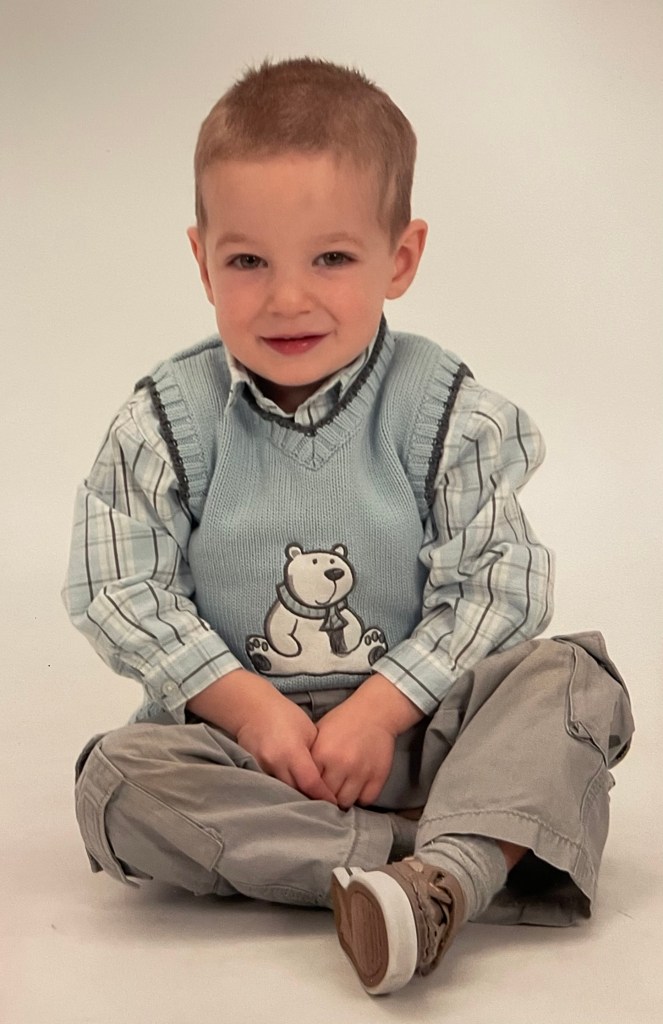
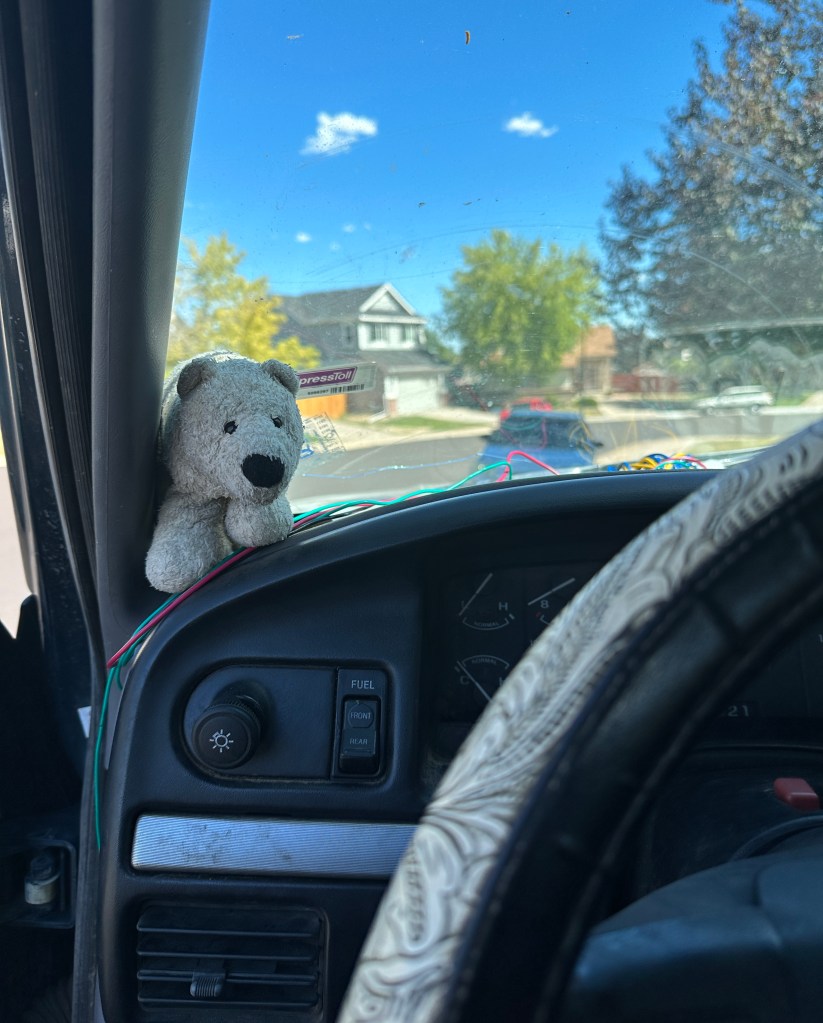
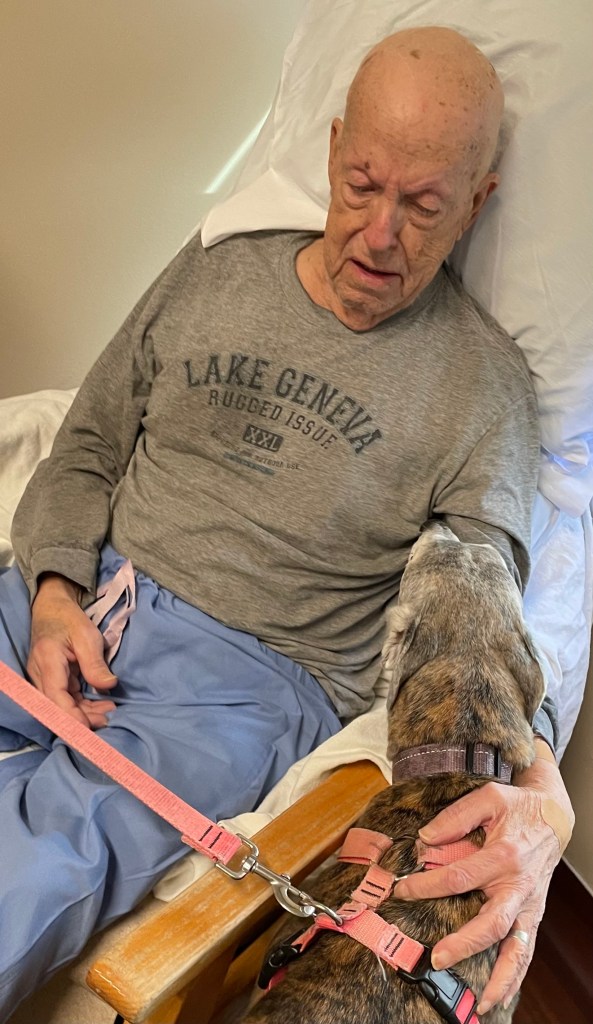
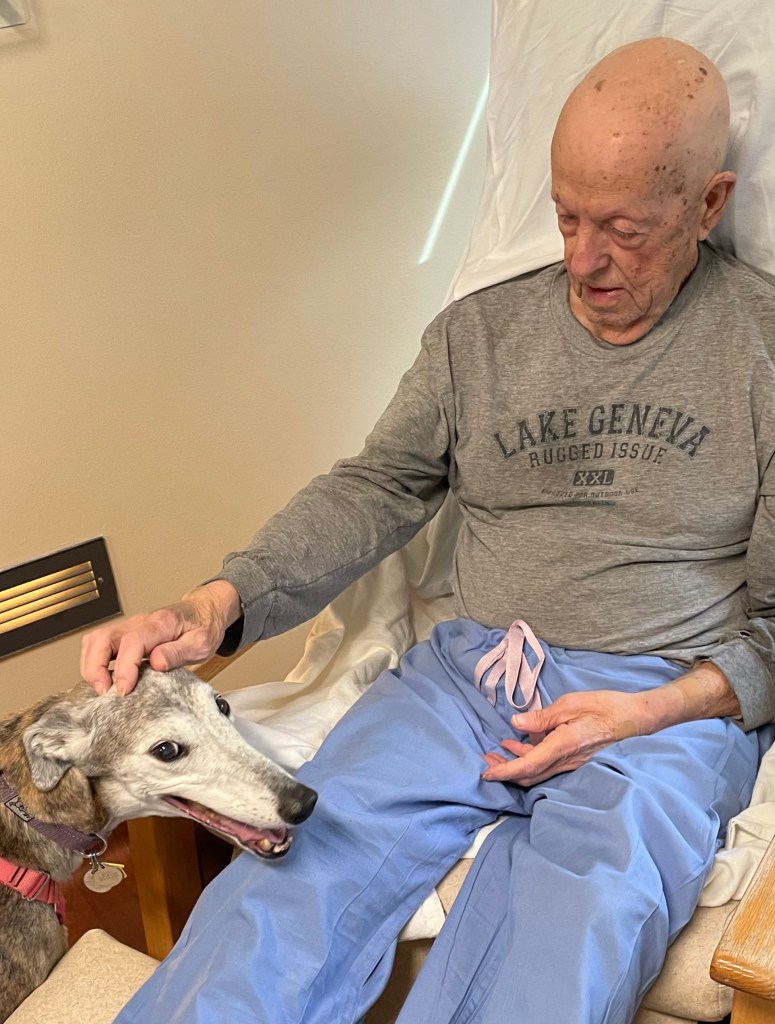
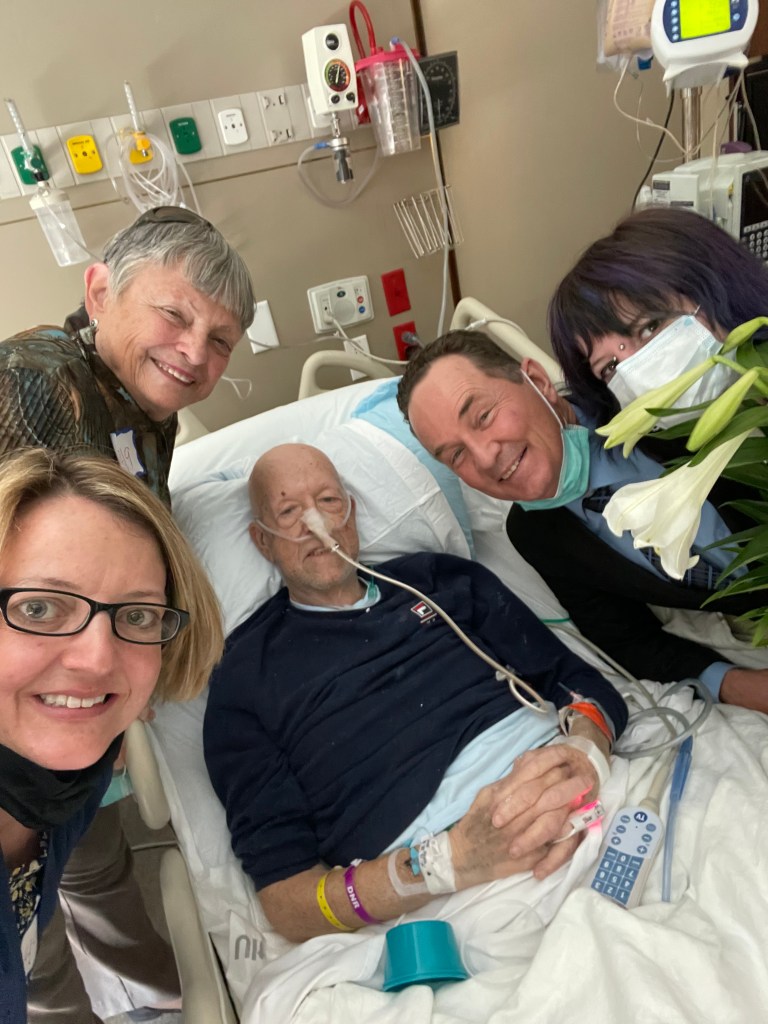
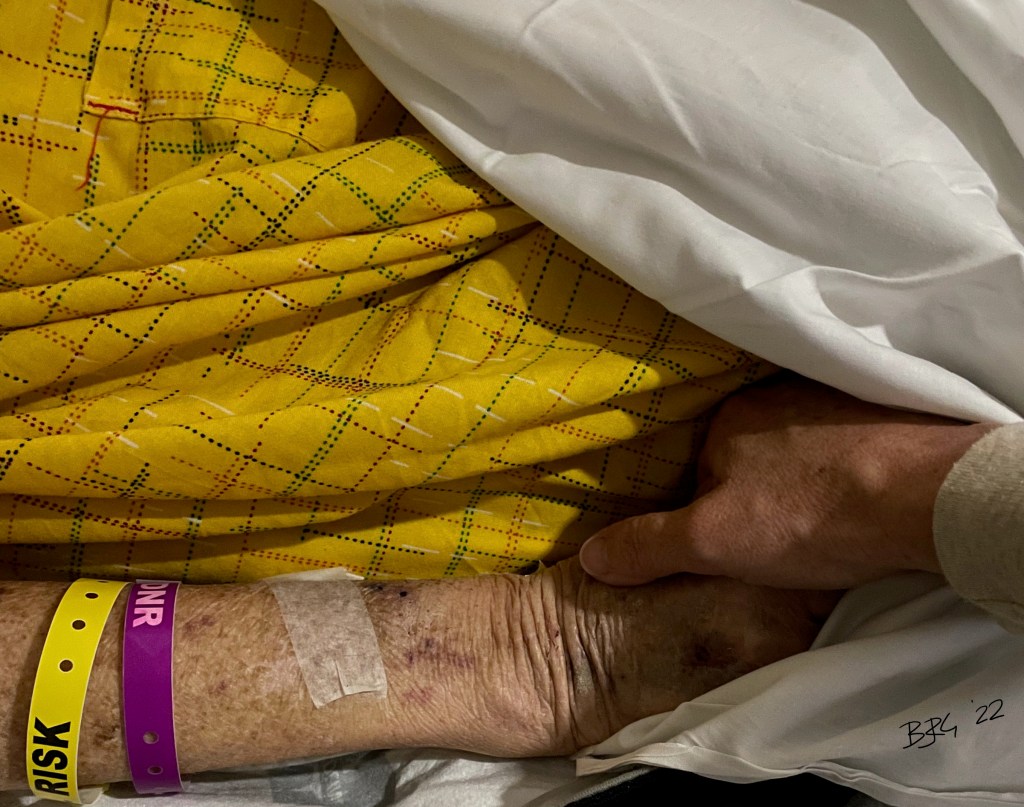


 Regardful Reverend